

The build vs. buy question on infrastructure is already closed for you. What you’re deciding now is which best-managed hosting platform earns the handoff. That means looking beyond uptime claims and feature lists to understand which providers consistently deliver reliable deployments, clear operations, and support that holds up when something breaks.
That’s where managed hosting decisions tend to go wrong. Not during the evaluation, but after it. Once the contract is signed and the implementation team has moved on, you find out whether the platform holds up or whether you’ve simply traded one set of infrastructure problems for another.
When I reviewed G2 data across providers, that’s what I was looking for. Which platforms consistently deliver when it counts, where the cracks start to show, and what tradeoffs teams are actually making. I mapped each platform to the factors shaping these decisions so the shortlist reflects real-world needs, not just vendor messaging.
The platforms in this guide serve different needs. WordPress.com is best for simple managed WordPress hosting, Hostinger for affordable managed hosting, Kinsta for high-performance WordPress hosting, Cloudways for multi-cloud flexibility, Webflow for visual website publishing, ScalaHosting for managed cloud VPS hosting, UltaHost for low-cost hosting, Google Cloud Storage for scalable object storage, and WP Engine for WordPress development workflows.
What are the best managed hosting platforms in 2026?
- Kinsta: Best for performance-focused managed WordPress infrastructure
Google Cloud–powered managed WordPress hosting built for strong speed and uptime. (Free trial available; Single-site starts at $35/month; Multi-site starts at $70/month.) - Hostinger: Best for cost-efficient shared managed hosting environments
Affordable managed hosting with global infrastructure, suited to small sites that need reliable performance at a low cost. (Premium starts at $12.99/month; Business starts at $18.99/month.) - WordPress.com: Best for simple, all-in-one managed WordPress hosting
All-in-one platform combining site building and hosting for creators wanting a quick setup and minimal management. (Free plan available; Personal starts at $4/month; Business starts at $25/month.) - Google Cloud Storage: Best for scalable cloud storage in hosting stacks
Scalable object storage within Google Cloud environments for data-heavy and distributed hosting needs. (Free tier available; Standard storage starts at ~$0.020–$0.023 per GB/month.) - UltaHost: Best for low-cost shared managed hosting with NVMe storage
NVMe-based shared hosting with backups, suited to small websites needing predictable, low-cost hosting. (SHARED Starter $5.99/month; SHARED Basic $7.99/month.) - Webflow: Best for design-led managed hosting with visual publishing workflows
Visual development platform with built-in hosting for marketing teams managing content-rich sites. (Free Starter available; Basic starts at $14/month; Business starts at $39/month.) - Cloudways: Best for flexible multi-cloud managed hosting orchestration
Managed hosting layer simplifying deployment across major cloud providers for flexible infrastructure control. (Free trial available; DigitalOcean Micro starts at $14/month.) - ScalaHosting: Best for managed cloud VPS hosting with bundled control panel
Cloud VPS hosting with SPanel and security features for teams wanting VPS control without heavy admin work. (Entry Cloud starts at $14.95/month; Managed Cloud #1 starts at $29.95/month.) - WP Engine: Best for workflow-focused managed WordPress hosting
Managed WordPress hosting with staging and automated backups for reliability-focused sites. (Startup $30/month; Professional $55/month.)
*These managed hosting platforms are top-rated in their category based on G2’s Summer 2026 Grid® Report. I’ve highlighted their strengths and ideal use cases to help you choose the right option.
9 best managed hosting platforms I recommend
“Managed” means different things depending on who’s selling it. Some providers handle the setup and leave the rest to you. Others take enough infrastructure work off your plate that your team barely thinks about the host at all. That’s what makes this category harder to evaluate than it looks.
When I went through the G2 reviews, I wasn’t looking at feature lists. I wanted to know what happens when traffic spikes, deployments go sideways, or a support ticket turns into a real incident. That’s usually where the differences start to show.
The teams behind these reviews weren’t all solving the same problem, either.
Agencies, SaaS companies, and enterprise teams all expect different things from a hosting provider. The platforms on this list stood out because they continued to meet those expectations long after onboarding was over.
How did I find and evaluate the best managed hosting platforms?
The shortlist started with G2’s Summer 2026 Grid Report for this category. That kept the evaluation grounded in platforms teams actively use, not tools that only surface in niche scenarios.
From there, I ran AI-assisted analysis across hundreds of verified G2 reviews to pull out what reviewers consistently bring up once a platform is live. The focus was on what happens after onboarding: how support holds up when something breaks, whether maintenance automation actually saves time or creates new work, and where the experience starts to diverge from what the vendor page describes.
Because I have not personally run every platform here in a live environment, I cross-validated these findings against feedback from DevOps practitioners, digital agencies, and engineering leaders using these hosts day to day. Visuals and product references are sourced from G2 vendor listings and publicly available documentation.
What makes the best managed hosting platforms worth it: My criteria
A few dimensions kept separating the platforms worth recommending from the ones that looked good on paper. Here is what I weighted most when making that call:
- Performance under real-world traffic: Resource contention is one of the most common complaints that surfaces once teams have been on a platform for a few months. I looked for environments where workloads stay isolated when neighboring sites spike, not just where the sales page promises they will.
- Maintenance automation that actually sticks: The promise of managed hosting is that routine server work stops being your problem. I paid attention to whether patching, backups, and environment monitoring ran without requiring teams to babysit the process, and whether automation held up through deployments rather than creating new conflicts.
- Staging and rollback reliability: A staging environment that behaves differently from production is not a staging environment. I weighted this heavily because it is where teams find out whether their deployment workflow is real or theoretical.
- Security built into the hosting layer: Firewall management, vulnerability patching, and threat detection matter more when they are native to the platform than when they are bolted on through third-party tools. I looked for platforms where security is part of the infrastructure, not an add-on that teams have to configure and maintain separately.
- Support quality during critical incidents: First-response speed is table stakes. What I actually evaluated is whether support teams can engage with complex, environment-specific problems or whether they hand you documentation and wait. That distinction becomes the whole difference during a migration or an outage.
No single solution excels across every dimension; the most effective platforms align with existing development and delivery workflows rather than forcing teams into rigid infrastructure patterns.
Below, you’ll find authentic user reviews from the Managed Hosting Platform category. To appear in this category, a tool must:
- Support a fully managed infrastructure with automated maintenance and monitoring.
- Provide reliable hosting environments with integrated security and performance controls.
- Enable deployment workflows, scalability, and operational visibility within the platform.
- Deliver ongoing updates and infrastructure management for production workloads.
This data was pulled from G2 in 2026. Some reviews may have been edited for clarity.
1. Kinsta: Best for performance-focused managed WordPress infrastructure
Kinsta is built around performance-focused WordPress and modern web application delivery. If you’ve been managing hosting for sites where stability isn’t optional, the pattern that comes through G2 reviews is consistent enough to be useful: reliability, responsive technical support, and infrastructure management that doesn’t require your team to babysit it.
The first thing I noticed when going through the review set was how smoothly the onboarding and migration experience came through. A 97% ease of doing business score isn’t a number that happens by accident, and reviewers back it up with specifics. Minimal friction moving sites from legacy hosts, fast time to production readiness, and a migration experience that reviewers consistently link to reduced downtime risk. If you’ve done a hosting migration that went badly before, you’ll know exactly why that part matters.
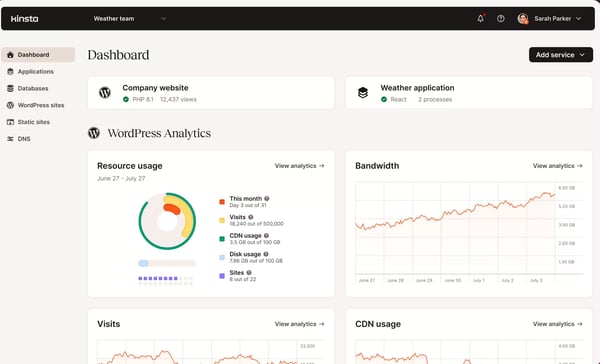
Speed and uptime were the two things that came through most clearly after that. G2 reviewers are consistent on this across production environments, not just in early-stage projects where everything looks fine. The optimized hosting stack and integrated caching hold up as traffic grows, which is the part that’s harder to evaluate from a demo and easier to verify from someone who’s actually run it under load.
What I couldn’t overlook was how often technical support came up unprompted. A 97% quality of support score tells part of the story. What G2 reviewers actually describe tells the rest: access to knowledgeable engineers who troubleshoot complex issues rather than cycling through standard scripts. If you’ve ever been stuck in a support queue during a high-pressure incident with someone who clearly doesn’t understand your stack, you’ll understand why this keeps showing up as a differentiator.
Beyond that, the practical workflow features hold up well in the reviews. Daily backups, staging environments, and built-in security safeguards come up repeatedly as things reviewers rely on rather than just appreciate having. Safe experimentation, quick rollback when something goes wrong, and no manual backup management sitting on someone’s task list. A 95% ease of use score places the dashboard and deployment tools above the category average, and reviewers describe that clarity in terms of what it actually enables: less time on infrastructure, more time on the work that matters.
Scalability is the last thing worth flagging, particularly if you’re evaluating this for a project that’s expected to grow. The Google Cloud infrastructure foundation means expansion doesn’t require manual resource tuning on your end. Reviewers describe consistent reliability as traffic increases, which is the kind of thing that sounds unremarkable until you’ve been on a platform that didn’t deliver it.
Pricing is the thing G2 reviewers most consistently flag if they’re coming from entry-level hosting. If you’re managing low-traffic sites on a tight budget, the cost difference is real and worth going in clear-eyed about. What reviewers on the other side of that conversation point to is what’s already folded in: infrastructure management, expert troubleshooting, and performance optimization in a single plan, without separate service contracts or specialist hires sitting on top. Whether that math works depends on where your team’s time actually goes today.
A handful of G2 reviewers have noted that media handling and Git-based automation can require additional structuring for more advanced workflows. If your team expects fully automated deployment pipelines out of the box, that’s worth pressure-testing during evaluation rather than discovering post-migration. Where reviewers are more aligned is on what runs without any manual configuration at all: caching, backups, staging, and performance optimization, covering the majority of what production WordPress sites need day to day. For most teams, the gap only surfaces at the edges of the workflow, not in the middle of it.
Kinsta stands out as a dependable managed hosting solution for agencies, developers, and growing businesses where speed, support reliability, and simplified infrastructure management matter more than direct server oversight. Teams that move to Kinsta tend to stay, not because switching is difficult, but because the hosting stops being something they think about.
What I like about Kinsta:
- It delivers consistently fast loading speeds and near-zero downtime, giving small businesses and agencies peace of mind for client-facing websites.
- The support team is highly technical and responsive, stepping in quickly during complex issues so teams can focus on growth instead of server management.
What G2 users like about Kinsta:
“ Kinsta offers a virtually perfect service, capable of supporting any project as it evolves while ensuring scalability. Their 24/7 real-time support is consistently impeccable, even when it comes to resolving complex issues that may require several hours of intervention. The reliability of their services, together with ongoing improvements and the development of new site management tools, delivers clear added value.”
– Kinsta review, Giovanni I.
What I dislike about Kinsta:
- Pricing is a premium compared to basic hosting, which suits performance-focused agencies and growing businesses, but may feel heavy for hobby sites or cost-sensitive projects. The Google Cloud infrastructure, expert support, and near-zero downtime deliver operational value that compounds as sites scale.
- Git automation and media handling may need additional structuring for teams expecting fully automated pipelines, though caching, backups, staging, and performance optimization run without manual configuration across the core hosting environment.
What G2 users dislike about Kinsta:
“The pricing is on the higher end, which is a lot to swallow when you’re just starting out and not yet generating revenue from your site. Would be great to have a cheaper entry-level option for hobby or passion projects.”
– Kinsta review, Chewie L.
2. Hostinger: Best for cost-efficient shared managed hosting environments
Hostinger supports teams launching websites and lightweight applications through a managed environment focused on simplicity and reliability. G2 review feedback emphasizes its straightforward setup, bundled features, and stable performance across everyday workloads.
The setup experience caught my attention early in the review process. G2 reviewers consistently highlight how easy it is to get projects live through Hostinger’s dashboard, a sentiment reflected in an ease of setup score of 92%, among the highest in the managed hosting category. Users describe connecting domains, enabling SSL, and deploying sites within minutes without navigating complex server configurations. This simplicity helps teams move from idea to launch faster while reducing reliance on technical specialists during early stages.
Users also reference smooth deployment for Node.js and WordPress projects. Feedback notes reliable uptime, responsive servers, and stable behavior during moderate traffic increases. This reliability supports production confidence for teams that need consistent performance without maintaining a VPS or dedicated infrastructure layer.

Across G2 reviews, I noticed positive thoughts on performance quality coming up repeatedly. Fast page loads and dependable uptime showing up consistently across reviews isn’t marketing language; it’s the kind of stability that quietly removes an entire category of work from your week. When you’re not troubleshooting hosting interruptions, that time goes somewhere more useful.
Support is where I paid closest attention, because that’s where managed hosting promises tend to break down. What the G2 data showed was different. An 89% quality of support score, with reviewers specifically describing helpful chat assistance and clear explanations when issues arise. If your team doesn’t have in-house infrastructure expertise, that number matters more than almost anything else on the feature list. It’s the difference between a minor technical challenge staying minor and becoming a half-day incident.
The integrated feature set is worth flagging if you’re currently stitching together separate tools for WordPress hosting, site creation, and security. Reviewers consistently highlight how consolidating those within a single interface simplifies day-to-day management in ways that are hard to quantify until you’ve experienced the alternative. Fewer vendors, fewer failure points, fewer context switches when something needs attention.
G2 users describe entry plans as affordable while still including practical features such as email hosting, CDN support, and security essentials. This balance supports cost control for startups and agencies managing several small client projects without sacrificing baseline performance.
Some G2 reviewers with a VPS or self-managed background have noted that advanced configuration flexibility is narrower than what they were used to. If your team regularly needs deep server-level control, that’s worth going in aware of. Where reviewers are more consistent is in flagging that, for most use cases, it doesn’t come up. The managed environment handles provisioning, security, and performance tuning automatically, which means the teams running these sites aren’t spending cycles on work the platform has already absorbed.
A handful of G2 reviewers have pointed out that certain backup, security, and performance features are gated behind higher-tier plans. If you’re scaling quickly and expecting the full feature set from an entry plan, you may find yourself looking at an upgrade sooner than anticipated. That said, what reviewers consistently note holds across every plan is the part that matters most at the start. Core hosting performance, uptime reliability, and SSL are available from day one, giving projects a dependable foundation before they’ve outgrown the base tier and need to have that conversation.
Hostinger serves small businesses, solo developers, and agencies seeking a straightforward way to launch and manage websites while keeping infrastructure demands minimal. Its mix of affordability, stable performance, and integrated tooling helps teams ship projects quickly while maintaining a dependable online presence. This balance keeps Hostinger relevant for growth-stage organizations prioritizing simplicity alongside reliable managed hosting fundamentals.
What I like about Hostinger:
- The dashboard and setup flow are very easy to navigate, making website and app deployment quick, even for users without strong hosting experience.
- The pricing delivers solid value, combining reliable performance, fast loading speeds, and useful bundled features like SSL, domains, and email hosting.
What G2 users like about Hostinger:
“Hostinger is very easy to use and implement. Setting up my Node.js projects was straightforward, with a smooth deployment process and a clear dashboard. The available features are practical, integrations like domains and SSL work seamlessly, and overall performance has been reliable. I use it frequently, and customer support has been helpful when needed.”
– Hostinger review, Zain A.
What I dislike about Hostinger:
- Advanced server configuration can feel more constricted than VPS environments, and may not fully support developers who need deeper infrastructure control. The platform handles provisioning, security, and performance tuning automatically so sites stay stable without infrastructure expertise.
- Some backup, security, and performance features require higher-tier plans; faster-growing projects may notice the upgrade path sooner, though core hosting performance, uptime, and SSL stay consistent across every plan from day one.
What G2 users dislike about Hostinger:
“Advanced settings or migrations can be tricky for someone who isn’t a web developer, and support can take a bit to resolve more complex problems. It can also take a few tries to fully customize email or security features in order to protect client work.”
– Hostinger review, Kate B.
3. WordPress.com: Best for simple, all-in-one managed WordPress hosting
WordPress.com is a managed hosting platform that brings website building, hosting, security, and maintenance into one place. It’s one of those platforms that, for years, was the single go-to choice for anyone non-technical trying to build a web presence for themselves without hiring a developer. It was thus not surprising for me to find out that a bulk of G2 reviewers were impressed with its straightforwardness. Teams use it to manage blogs, marketing sites, portfolios, and e-commerce projects with minimal operational effort. This all-in-one structure helps organizations focus on publishing and growth rather than on infrastructure work.
What I noticed in G2 reviews about WordPress.com is how consistently users reference simplified deployment enabled by automated updates, built-in hosting, and integrated security layers. This reliability supports uninterrupted publishing cycles and reduces maintenance responsibilities commonly associated with traditional hosting environments.
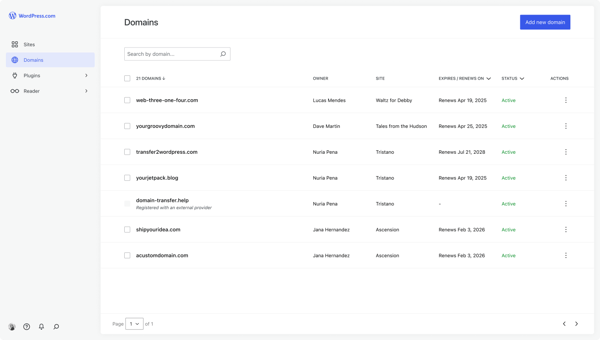
Setup simplicity shows up repeatedly in feedback, reflected in an ease of setup score of 84%, with G2 insights highlighting how users can create sites, choose themes, and publish content quickly through guided onboarding. This streamlined flow accelerates launch timelines and helps teams reach operational readiness faster when speed is a priority.
I also noticed in the G2 reviews that platform stability and dependable performance stood out as themes reviewers return to consistently, describing the environment as reliable and trustworthy across ongoing site operations. I would value this a lot because very often, the easy-to-use tools are not the best when it comes to reliability. Not in this case, though. This performance predictability supports publishing cadences where interruptions would directly affect audience reach and business credibility.
Customization through themes and plugins shapes site design workflows, and with an ease of use score of 86%, G2 users highlight how professional layouts can be achieved while keeping configuration manageable. This flexibility lets teams tailor visual identity and functionality without altering or even worrying about the underlying code, helping them maintain creative control alongside streamlined maintenance.
Another well-appreciated feature of WordPress.com is the SEO and analytics integrations support for marketing workflows. The platform is compatible with tools such as Rank Math and Google Analytics, allowing users to track performance and optimize content in one environment.
Collaboration features and role-based permissions also influence adoption. G2 insights highlight how shared access for authors, editors, and administrators supports distributed content teams while maintaining oversight over site updates and publishing workflows.
If you’ve come from self-hosted WordPress, you’ll notice the customization ceiling faster than most. I noticed this concern shows up in some reviews. Plugin flexibility is narrower here by design, and if your team is used to having full control over the stack, that structure takes some adjustment. That said, if you’re honest about how much of that control you actually used versus maintained out of habit, the trade-off looks different. What you’re getting in return is a managed architecture where security, updates, and hosting are unified and consistently maintained across every site on the platform. For most teams, that’s not a downgrade. It’s the point.
Pricing is worth going in with clear eyes on. Entry plans won’t give you everything, and as your requirements grow, so does the cost. That’s not unique to this platform, but it shows up in enough G2 reviews to be worth flagging before you’re mid-contract and recalculating. The counter to that is what’s already bundled at every tier. Hosting, security, and automatic updates are included, which means the hidden operational costs that self-managed environments quietly accumulate don’t apply here. When you’re doing the actual cost comparison, that’s the number that tends to shift the math.
Overall, WordPress.com remains a practical fit for small businesses and content-led teams seeking dependable hosting with minimal technical overhead. Its bundled infrastructure and accessible site management reinforce its role as a reliable managed hosting option for steady publishing and scalable website ownership.
What I like about WordPress.com:
- G2 reviewers highlight how easily sites can be launched and maintained with hosting, security, and updates handled automatically, helping non-technical teams publish without infrastructure overhead.
- Built-in themes, plugins, and SEO integrations support professional site creation and marketing workflows while keeping setup simple and manageable for everyday users.
What G2 users like about WordPress.com:
“I really like that WordPress.com is very easy to use, which is great for blogging and setting up single-page websites or even e-commerce sites. It’s fast to create or develop a website, and a lot of things are manageable from the servers. Plus, you don’t need to worry about spending a lot of time creating content. The platform’s performance is reliable, and it’s convenient to use multiple tools and buttons, making the whole process easy and manageable.”
– WordPress.com review, Prachi V.
What I dislike about WordPress.com:
- G2 reviewers note customization can be narrower than self-hosted WordPress; developers needing deep control may find it restrictive. The platform keeps its infrastructure consistently maintained and secure without any server-side intervention required.
- Premium features tied to higher plans mean costs can rise as requirements expand, but the bundled hosting, security, and updates at every tier remove the hidden overhead that self-managed setups typically carry.
What G2 users dislike about WordPress.com:
“One thing I dislike about WordPress.com is the limitation in customization and flexibility compared to self-hosted WordPress. Some advanced features, plugins, and design control require higher-tier plans, which can increase costs. It can also feel restrictive when trying to implement very specific functionality or custom integrations.”
-WordPress.com review, Mohit C.
4. Google Cloud Storage: Best for scalable cloud storage in hosting stacks
Google Cloud Storage supports data hosting and object storage workflows across the managed hosting category, combining scalable infrastructure with integration across Google Cloud services. G2 reviews frequently connect the platform with dependable storage performance, global accessibility, and strong alignment with analytics and application workloads.
G2 user feedback highlights dependable scalability across storage workloads. Teams describe managing large files, distributed datasets, and globally accessed content without maintaining physical infrastructure, helping applications remain available and responsive as usage grows.
Across G2 reviews, I noticed that integration with Google services appears as a consistent advantage. Connectivity with tools such as BigQuery, Firebase, and Google Workspace allows storage to operate within broader analytics and collaboration workflows, improving data flow and reducing manual transfers between platforms.
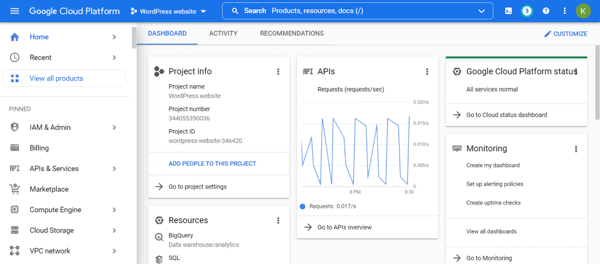
A broad API and services ecosystem shapes how development teams integrate Google Cloud Storage into wider workflows, supported by an ease of setup score of 92%, where reviewers reference access to default APIs across the platform that connect storage directly to maps, authentication, and application services without requiring custom middleware.
Reading through G2 developer feedback, the CI/CD and developer workflow compatibility angle came up more than I expected. With engineering teams, there is a structured path for deploying and managing applications alongside cloud storage. G2 reviewers note that using Cloud Run for continuous deployment of web applications, with storage operating as a consistent layer across development and production environments. Container orchestration and serverless deployment capabilities further extend what teams can build without adding separate infrastructure tooling.
The platform is easy to use with a clear and understandable interface, helping users navigate services without extensive onboarding time, with an ease of use score of 92% reflecting positive sentiment around the platform’s clarity, according to G2 reviewers. This accessibility supports faster adoption across development, analytics, and operations teams that need to work within the same cloud environment without specialized training requirements.
Operational reliability underpins confidence for teams running live application workloads through Google Cloud Storage. G2 reviewers describe consistent use across business-critical workflows without encountering platform-side disruptions, supporting the case for storage as a dependable foundation in cloud-based application stacks. For organizations already invested in Google infrastructure, the platform’s stable behavior reinforces long-term operational trust.
G2 reviewers note that support responsiveness can feel limited for teams newer to the Google Cloud environment, with beginners finding it harder to get contextual guidance when navigating unfamiliar configurations. Organizations with dedicated cloud engineering resources tend to find the available documentation and tooling sufficient. The platform’s documentation depth and tooling breadth continue to cover the majority of operational needs for teams running established Google Cloud workflows.
G2 reviewers point out that Google Cloud’s ecosystem footprint remains smaller than AWS and Azure in terms of third-party integrations and community support depth. Teams evaluating multi-cloud or cross-platform compatibility may notice the difference in breadth. Native integrations across BigQuery, Firebase, and Workspace continue to operate reliably, and the core infrastructure handles storage, delivery, and application workloads without dependency on third-party extensions.
Within the managed hosting category, Google Cloud Storage presents itself as a scalable storage foundation aligned with analytics, development, and global application delivery needs. Strong market visibility reinforces its role in cloud infrastructure workflows, while review patterns highlight dependable storage performance and ecosystem integration. For teams building data-intensive applications within Google Cloud environments, it remains a relevant and well-aligned storage platform.
What I like about Google Cloud Storage:
- G2 reviewers highlight strong scalability and performance, with teams handling large datasets and global workloads without added infrastructure effort.
- Users frequently mention seamless integration with BigQuery, Firebase, and Workspace, making storage a natural fit within analytics, development, and collaboration workflows.
What G2 users like about Google Cloud Storage:
“Google Cloud is notably useful due to its scalability and powerful infrastructure, making it suitable for enterprises of all sizes. One of the most significant advantages is its superior data analytics and machine learning capabilities, such as BigQuery and Vertex AI, which help enterprises gain insights and develop intelligent applications. It integrates seamlessly with other Google services, increasing efficiency and collaboration — particularly with technologies such as Google Workspace.”
– Google Cloud Storage Cloud review, Sergey B.
What I dislike about Google Cloud Storage:
- Support guidance can feel limited for teams newer to the Google Cloud environment, with beginners finding contextual help harder to access, while the documentation library remains extensive, and the tooling covers core storage, compute, and integration needs without gaps.
- The ecosystem footprint is smaller than AWS and Azure in third-party integrations and community depth, which teams evaluating cross-platform compatibility notice most at the selection stage, while native integrations across BigQuery, Firebase, and Workspace operate reliably across storage and application workflows.
What G2 users dislike about Google Cloud Storage:
“It has a very small market share as compared to its active competitors like AWS and Azure, and its support service is not that good either for a beginner in the GCP environment.”
– Google Cloud Storage Cloud review, Lalit A.
5. UltaHost: Best for low-cost shared managed hosting with NVMe storage
UltaHost brings VPS, shared, and dedicated hosting environments together to support websites, applications, and client portfolios from a single infrastructure. G2 reviews describe it as a practical hosting option balancing ease of use with server-level control, especially for WordPress deployments and multi-site management.
Uptime during high-traffic events is where I’d start if you’re evaluating this for e-commerce or campaign-heavy work. G2 reviewers describe sites staying responsive during flash sales, product launches, and promotional surges, the exact moments where a hosting failure has a direct revenue consequence. If you’ve ever watched a site buckle during a campaign you spent weeks building toward, you’ll know why this shows up consistently across reviews and carries weight.
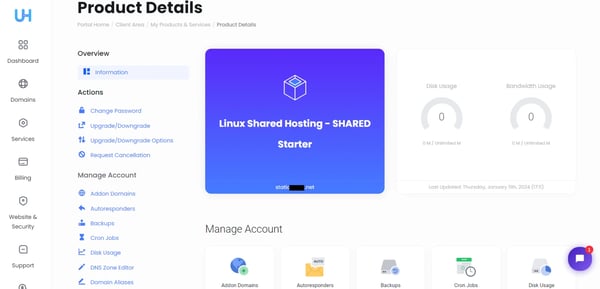
Ease of setup comes through clearly in the data, backed by a 97% ease of setup score that reflects something reviewers actually describe rather than just rate. One-click WordPress installation, SSL configuration, and guided migration support, letting teams without deep hosting knowledge get sites live faster. For marketing and product teams who need to move without waiting on infrastructure, that reduced friction shows up directly in how quickly campaigns get off the ground.
What stood out to me most for agencies specifically was the centralized dashboard. A 99% ease of admin score with reviewers describing consolidated domain management across billing, monitoring, and maintenance in a single interface. If you’re currently context-switching between separate panels for separate clients, you’ll recognize exactly what that removes from your week.
Server-level flexibility is worth flagging if your team sits closer to the developer end of the spectrum. VPS root access, SSH connectivity, and customizable stacks for specialized development environments come through in G2 reviews as genuinely useful rather than technically present but hard to access. The hybrid model works for teams that need tailored configurations without moving to fully unmanaged infrastructure, which is a balance that’s harder to find than it sounds.
Support responsiveness comes up in G2 feedback in the areas where it matters most: DNS guidance, migrations, and configuration requests like port access. Reviewers describe assistance as prompt and specific rather than generic. If you’ve spent time in support queues during a migration that couldn’t wait, you’ll understand why that distinction shows up as a differentiator in the reviews rather than just a baseline expectation.
The NVMe SSD storage layer is the last thing worth calling out, and it’s one I’d encourage you to look at carefully if raw performance is a real constraint. G2 reviewers highlight faster page loads, quicker database queries, and more responsive application behavior compared to standard SSD configurations. It’s a hardware foundation that shows up in the metrics that actually affect user experience, not just in a spec sheet.
Some G2 users mention that performance monitoring and analytics remain fairly limited; teams needing deeper infrastructure metrics may look for advanced observability tools. Core hosting performance, NVMe storage speed, uptime reliability, and deployment stability continue to operate consistently across all plan tiers.
Documentation and interface navigation can also take extra effort, especially when accessing advanced DNS or cache settings, which may feel less intuitive for highly technical teams expecting quicker configuration clarity. However, One-click installs, SSL configuration, centralized domain management, and routine administrative tasks remain straightforward and accessible throughout.
UltaHost supports reliable hosting with stable uptime, simplified deployments, centralized multi-site management, and accessible server customization. Its strong small-business presence reflects relevance for agencies, ecommerce teams, and developers seeking dependable infrastructure with manageable overhead.
What I like about UltaHost:
- It keeps sites stable during traffic spikes and flash sales, which works well for e-commerce teams and agencies that cannot risk downtime during campaigns.
- One-click installs, beginner-friendly controls, and multi-site dashboard management make deployments faster, benefiting small teams and freelancers handling several client projects.
What G2 users like about UltaHost:
“Ultahost has helped us maintain excellent uptime for our clients’ sites, even during heavy traffic peaks. The interface is also very simple, making it easy for beginners to use, while still being suitable for professional server use.”
– UltaHost review, Kathir M.
What I dislike about UltaHost:
- Performance monitoring and analytics stay fairly basic, which teams managing complex multi-site workloads notice most when diagnosing performance patterns beyond uptime, while core hosting performance, NVMe storage speed, and deployment stability continue to operate consistently across all plan tiers.
- Documentation depth and certain interface areas require extra navigation for advanced DNS or cache settings, specifically, most noticeable for highly technical teams, while one-click installs, SSL configuration, centralized domain management, and routine administrative tasks remain straightforward throughout.
What G2 users dislike about UltaHost:
“Staging and the rollback feature feel somewhat limited, especially when I compare them to what specialized WordPress hosts typically offer.”
– UltaHost review, Santier B.
6. Webflow: Best for design-led managed hosting with visual publishing workflows
Webflow occupies a specific position in this category that’s worth understanding before you evaluate it. It combines design, CMS, and managed hosting in one environment, which sounds like a lot of platforms claim to do. What makes the difference here is how those three things actually work together for marketing and design teams who need to move fast without pulling in a developer every time something needs to change.
What became clear to me going through G2 reviews is that the visual Designer isn’t just well-liked, it’s what teams build their entire publishing workflow around. Reviewers describe marketing teams creating, editing, and publishing pages independently while maintaining design consistency across the site. If you’ve ever watched a campaign stall because a developer was the only person who could push a change, you’ll understand exactly why that keeps showing up as the thing reviewers lead with.
CMS functionality backs that up. A 92% ease of admin score with reviewers describing structured collections that handle blogs, landing pages, and localized content without requiring technical involvement. The workflow implications are ones you’ll recognize: faster content cycles, fewer handoffs, and less time between a brief and a published page.
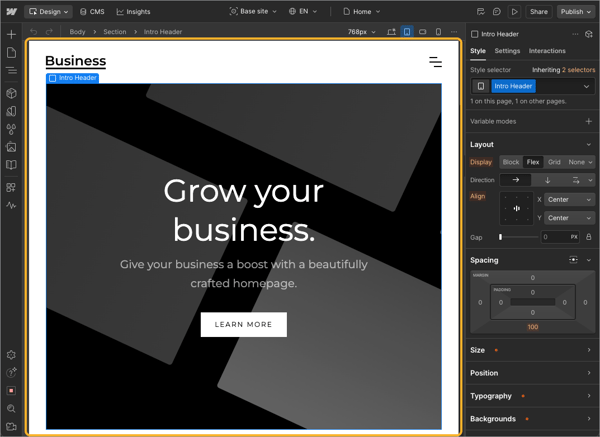
Design flexibility is where Webflow earns its 89% meets requirements score in a way that’s harder to appreciate until you’ve used it. Responsive layout controls, animation capabilities, and CSS-level customization within a visual interface. What I kept finding in G2 reviews was teams describing production-ready experiences built without sacrificing the creative precision that usually requires going into code. For design-led teams, that’s not a minor convenience.
Hosting reliability holds up well in the review data, too. Uptime stability, performance improvements, and built-in security safeguards are coming through consistently, with an 87% quality of support score reflecting the assistance available when infrastructure questions arise. The practical outcome reviewers describe is the same one you’d want: infrastructure overhead that stays low enough that your team’s attention stays on experience delivery rather than backend maintenance.
AI-assisted features stood out to me in the G2 feedback from marketing teams specifically. Meta description generation and content ideation come up repeatedly as genuine time-savers rather than features that sound useful in a demo and get ignored in production. If you’re managing multiple properties, the SEO workflow acceleration is the part that compounds most visibly over time.
On integrations, the native connections to HubSpot, Salesforce, and content automation services come through in reviews as genuinely smooth rather than technically present but operationally painful. If you’re running connected workflows across design, content, and campaign delivery, what I found in the data is consistent: the coordination overhead drops once those integrations are in place rather than simply moving the friction somewhere else.
Something worth flagging that came up in G2 reviews: publishing, saving, and loading pages in the Designer can behave unexpectedly during periods tied to updates or infrastructure dependencies. Reviewers who felt this most were teams working across multiple active sites or shipping frequent design changes under time pressure. It’s worth knowing about if that describes your workflow. What reviewers are consistent about is that live site performance operates independently when it happens. Published pages stay stable and accessible, so the impact stays contained to the authoring experience rather than touching what your visitors actually see.
CMS item limits and pricing tiers are the other things G2 reviewers flag as you scale. If you’re managing high content throughput across a large multi-site portfolio, you’ll likely feel the ceiling sooner than smaller operations would. That’s a planning conversation worth having early rather than mid-contract. What holds across every plan tier without degradation, as reviewers consistently note, is the core of what makes Webflow worth evaluating in the first place. The visual Designer, integrated hosting, and responsive layout controls remain fully functional regardless of where you sit on the pricing ladder.
Taken together, Webflow stands out as a structured platform for teams seeking creative control, CMS flexibility, and integrated hosting within a single environment. Its blend of visual design autonomy and operational reliability supports organizations focused on fast website iteration, content scalability, and consistent digital experience delivery.
What I like about Webflow:
- The visual Designer makes it easy for marketing teams to build and publish pages independently, helping reduce developer dependency and speed up launches.
- The built-in CMS and hosting combine stability, design flexibility, and performance, allowing teams to manage dynamic content and multi-site workflows in one place.
What G2 users like about Webflow:
“I really appreciate Webflow’s easy user interface, which my entire marketing team can use, making speed-to-launch faster and impact greater as a result. I host my enterprise website on Webflow and use their Optimize feature for personalization and testing. The best-in-class uptimes and excellent security features are impressive. I like the native integration of localization and animation with GSAP. AI tools for SEO, like auto-generated meta-descriptions and alt text, further allow me to run a high-performance website for my B2B SaaS company.”
– Webflow review, Josephine C.
What I dislike about Webflow:
- Publishing and saving in the Designer can behave unexpectedly during updates, most noticeable in the authoring environment rather than in live site performance, which continues to operate stably and independently.
- CMS item limits and pricing tiers require closer planning as content volume grows, with large multi-site portfolios feeling this most, while the visual Designer, integrated hosting, and responsive layout controls remain fully functional across every plan tier.
What G2 users dislike about Webflow:
“The limits for CMS can actually be increased for each pricing tier, as the current ones feel limited beyond a point. We have to write to the Webflow team to get it increased.”
– Webflow review, Akash A.
Running workloads across cloud-based hosting providers means infrastructure costs can grow faster than expected. Check out the best cloud cost management platforms on G2 to track, optimize, and control spend as your stack scales.
7. Cloudways: Best for flexible multi-cloud managed hosting orchestration
Cloudways sits in an interesting position in this category. It lets you deploy and manage applications across AWS, Google Cloud, and DigitalOcean from a single platform, which on paper sounds like it could get complicated fast. What I kept finding in G2 reviews was the opposite. Ease of use, stable uptime, and responsive support are coming up repeatedly as the reasons teams made the move from traditional hosting. If you’re running multiple sites across different clients or projects, that pattern is worth paying attention to.
The dashboard is where the usability advantage shows up most clearly in the data. A 93% ease of use score backed by reviewers describing clean navigation and straightforward controls for deploying applications, managing servers, and handling routine tasks without friction. For agencies managing multiple environments, that last part matters more than it sounds. When your team can handle site management independently without creating a technical dependency, that’s time and overhead that doesn’t accumulate.
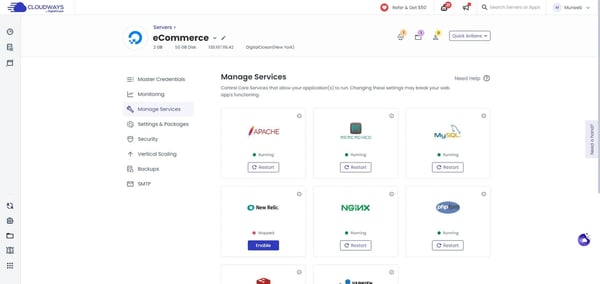
Support is the other thing I couldn’t overlook. A 94% quality of support score, with reviewers specifically describing quick responses and knowledgeable guidance during migrations, troubleshooting, and configuration changes. If you’ve managed hosting across multiple client sites, you already know that support depth is the variable that determines whether an incident stays contained or becomes a client conversation you didn’t want to have.
Performance improvements after migration come through consistently in G2 feedback. Faster load times, better uptime, smoother traffic handling. Reviewers connect these gains directly to improved website metrics and customer experience, particularly when moving from slower or less reliable providers. What also comes through is how Cloudways handles scaling when you need it. Simple resource upgrades, cache management, and backup control that don’t require complex provisioning. For teams without dedicated infrastructure specialists, that operational simplicity is what makes growth feel manageable rather than stressful.
Centralized multi-site management is where the platform earns its 94% meets requirements score, and it’s easy to see why when you read through what reviewers actually describe. Servers, applications, backups, and security settings are controlled from a single interface. For agencies and freelancers maintaining consistency across client projects, that consolidation removes an entire layer of context-switching that builds up quietly over time.
Backup management and restore capabilities round out what G2 reviewers consistently flag as a genuine operational safety net. Straightforward access to regular backups, one-click restoration, and archive controls that work without manual intervention or external tooling. If you’ve ever had a deployment error or unexpected content loss across a client site and had to explain it, you’ll understand why this showing up reliably across reviews carries more weight than it might otherwise.
A few G2 reviewers have flagged that domain registration and business email sit outside the platform, requiring external providers for both. If you’re coming from an all-in-one hosting setup, that separation is noticeable. What reviewers are consistent about is where Cloudways does keep everything centralized: server provisioning, cache management, backup controls, and multi-site oversight are all handled within the platform without needing to reach outside it. The gap is narrow, but worth knowing about before you set expectations with a client or a team.
Some G2 reviewers have also noted occasional slowness in the admin backend during heavier activity, with management interface load times taking longer than expected under certain conditions. It’s worth flagging, though, that what reviewers are equally clear about is that core deployment workflows, application performance, and uptime stay stable and unaffected when it happens. It’s an inconvenience at the edges of the experience, not something that touches what the platform is actually responsible for delivering.
Cloudways delivers a reliable managed hosting experience built on usability, performance stability, and accessible scalability, well-suited for agencies, freelancers, and small businesses managing multiple websites without a dedicated infrastructure team.
What I like about Cloudways:
- A clean, simple dashboard makes deploying servers and managing multiple sites easy, helping agencies and freelancers stay in control without heavy technical effort.
- Reviewers highlight strong uptime, faster website speed after migration, and responsive 24/7 support that builds confidence in day-to-day hosting reliability.
What G2 users like about Cloudways:
“It’s been helping our business since 2022 in effectively managing my websites. Recently, we have started a new business which focuses on developing the skills of students and professionals – asktest. online, and it’s hosted on Cloudways. It has an easy-to-use dashboard with brilliant customer support, which is continuously active 24/7, dedicated to help users.”
– Cloudways review, Ganesh R.
What I dislike about Cloudways:
- Domain registration and business email require external providers, which teams managing several client environments notice most when consolidating tooling, while server provisioning, cache management, backup controls, and multi-site oversight remain fully handled within the platform.
- Occasional backend slowdowns appear during heavier admin activity, affecting teams performing multiple simultaneous tasks most, while core deployment workflows, application performance, and uptime remain stable and unaffected during these periods.
What G2 users dislike about Cloudways:
“A DNS management tool would be great. And also being able to update PHP versions on an application basis rather than the whole server would be useful.”
– Cloudways review, Jon M.
8. ScalaHosting: Best for managed cloud VPS hosting with bundled control panel
ScalaHosting is a managed hosting provider focused on cloud VPS infrastructure, WordPress optimization, and simplified server administration through its proprietary SPanel control panel. G2 reviews highlight how teams transition from traditional shared hosting toward a more stable and controllable environment without needing deep system administration expertise.
Across G2 feedback, I saw that support responsiveness is reflected in fast, human assistance that resolves technical issues and supports teams managing client or business-critical sites, as reflected in the quality of support rated at 98%. This responsiveness helps reduce downtime concerns and builds confidence, especially for users migrating from slower ticket-based providers.
Performance stability and uptime reliability also appear in G2 user commentary, with managed VPS infrastructure delivering faster load times and smoother operation compared to previous hosts. This consistency supports agencies and developers managing multiple projects, helping websites remain accessible with less monitoring and troubleshooting.
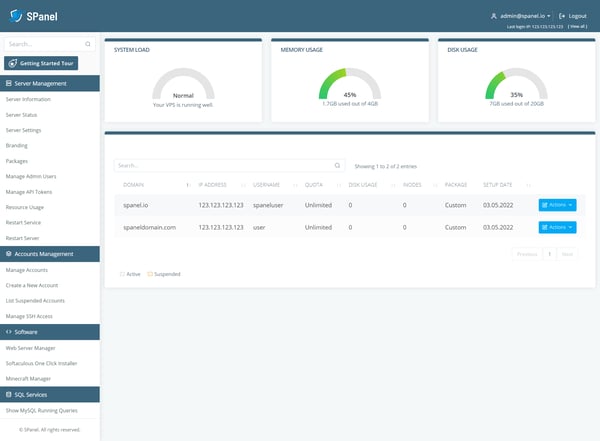
G2 reviewers describe SPanel as a capable alternative to traditional control panels, providing domain, backup, and security management within a streamlined interface. The environment reduces licensing overhead while preserving administrative flexibility, and users note that daily tasks like email management, file access, and resource scaling remain accessible without unnecessary complexity, with the control experience scaling naturally alongside growing project demands.
Managed service capabilities receive positive attention through proactive server maintenance, security monitoring, and optimization handled by ScalaHosting’s team. This structure removes routine administrative burdens and enables developers and business owners to focus on application delivery instead of infrastructure upkeep. Users managing SaaS tools, ecommerce sites, or agency portfolios describe gaining time savings alongside improved reliability.
Migration and setup are often described as smooth, with guided onboarding and support for transferring data from previous providers, helping reduce transition friction and bring projects live faster. The onboarding process accommodates teams at different experience levels, making managed VPS adoption more accessible for smaller organizations.
G2 users note flexible scaling and strong value for money, pointing to straightforward resource adjustments and pricing that aligns well with performance delivered. This flexibility supports evolving workloads, while predictable costs and reliable performance contribute to long-term hosting confidence.
Some feedback indicates SPanel’s interface may require a brief adjustment for users migrating from familiar environments due to its custom design. Those used to traditional panels may notice the shift before adapting. However, domain management, backup controls, email administration, and resource scaling are fully accessible within SPanel and operate without gaps in core functionality.
Some G2 reviewers mention that certain configuration areas require additional attention after setup, particularly for users transitioning from familiar control panel environments or working through post-migration settings adjustments. The managed infrastructure layer continues to handle server maintenance, security monitoring, and performance optimization throughout, keeping sites stable while configuration is finalized.
ScalaHosting works best for small businesses, agencies, and developers seeking dependable cloud VPS infrastructure with strong support and simplified server management. Its focus on performance stability, guided onboarding, and administrative control supports teams scaling digital projects while keeping infrastructure overhead low.
What I like about ScalaHosting:
- The support team is consistently described as fast, knowledgeable, and genuinely helpful, giving teams confidence when managing business-critical sites or client projects.
- Managed VPS performance and SPanel control provide strong stability with flexible scaling, helping growing websites stay reliable without heavy server administration effort.
What G2 users like about ScalaHosting:
“Peace of mind. Their service, interface, and support are outstanding. The most important piece for me is the support team, which, without question, is the best I’ve experienced. Live chat is always available; I rarely have to wait, and the support team is very capable and helpful, sometimes helping with stuff that is not in their lane. Their hosting is solid and optimized for WordPress. Performance is outstanding, and uptime is easily 99.9% if not better.
“
– ScalaHosting review, Vincent M.
What I dislike about ScalaHosting:
- SPanel’s layout takes a brief adjustment for teams migrating from cPanel-style environments, with navigation patterns feeling unfamiliar early in the transition, while domain management, backup controls, email administration, and resource scaling remain fully accessible and operational throughout.
- Certain configuration areas require additional attention after initial setup, most noticeable for teams working through post-migration adjustments beyond the core onboarding experience.
What G2 users dislike about ScalaHosting:
“The increase in their costs has been a factor to consider, since, although they explain that it is a cost passed on by their own suppliers, it affects decision-making. Additionally, the allocated storage sometimes proves insufficient, which requires growth alternatives at an affordable cost.”
– ScalaHosting review, Rene C.
9. WP Engine: Best for workflow-focused managed WordPress hosting
WP Engine is built specifically for managed WordPress hosting, which matters more than it sounds. A platform designed around one thing tends to go deeper on that thing than a generalist host trying to cover everything. What I found in G2 reviews is consistent with that: teams launching, managing, and scaling WordPress sites without maintaining servers independently, and the experience holding up across business and agency workflows at scale.
Ease of use during setup comes through clearly in the data, backed by a 92% ease of use score that reviewers describe in practical terms. Guided onboarding, a clear dashboard, and intuitive controls that reduce friction across daily management tasks. If your team handles frequent updates across multiple sites, you’ll recognize the value of an interface that stays accessible across skill levels rather than requiring a learning curve every time someone new needs to use it.
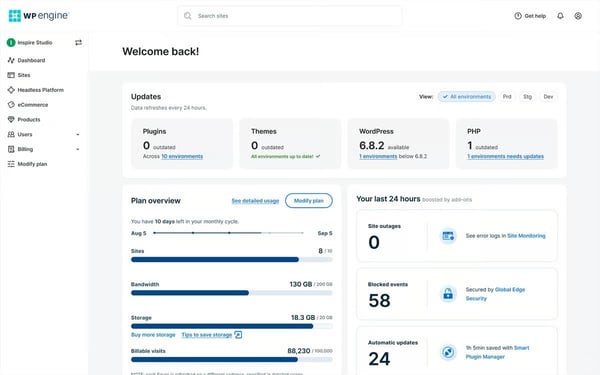
Staging and backup workflows are where I’d point you if release confidence is a real concern in your current setup. G2 reviewers describe testing updates in staging before pushing to production and relying on automatic backups to recover cleanly from plugin conflicts or unexpected issues. For agencies managing multiple client sites, that combination directly reduces the downtime risk that makes client conversations uncomfortable.
Support quality was harder to dismiss in WP Engine’s review set than in most platforms I went through. What reviewers describe isn’t templated responses or generic troubleshooting. It’s staff who bring genuine WordPress depth to each interaction and respond with clear, specific guidance. If you’ve ever tried to resolve a WordPress-specific issue or plugin conflict with a support team that clearly didn’t understand the platform, you’ll know exactly why this keeps showing up as a differentiator.
Security and managed infrastructure come through in G2 feedback in a way that reflects a 92% ease of setup score rooted in something real. Monitoring, patching, and performance tuning run in the background without requiring your team’s attention. Fewer concerns around updates and vulnerabilities showing up in reviews, not because the platform claims to handle them, but because reviewers describe not having to think about them. That’s the outcome you’re actually looking for.
Scalability holds up well in feedback from agencies hosting large WordPress portfolios. G2 reviewers describe performance staying stable as traffic demands grow, across everything from basic marketing sites to complex ecommerce deployments. If you’re evaluating this for a portfolio that’s expected to grow in both size and complexity, the consistency across varied workloads in the review data is worth paying attention to.
Multi-site management is the last thing worth flagging, particularly if you’re running a large volume of client properties. G2 reviewers describe centralized access controls, user permissions, and collaborator assignments managed without moving between disconnected accounts or duplicating configuration work across properties. For agencies managing dozens of WordPress sites, that operational consolidation removes a layer of overhead that builds up quietly and compounds faster than most teams expect.
Some G2 users mention WP Engine’s structured architecture limits direct server-level control, which may feel restrictive for developers used to deep infrastructure customization. Highly technical users seeking granular configuration may view the guardrails as boundaries. Security patching, performance optimization, monitoring, and environment management continue to run automatically across every hosted property without requiring server-level intervention.
Pricing is also noted as higher than budget hosting alternatives, reflecting premium infrastructure and support, and aligning with agencies and businesses valuing stability, while cost-sensitive SMBs may weigh the investment more carefully, though staging environments, automated backups, managed security, and performance tuning are included without separate contracts or add-on fees at every tier.
All in all, WP Engine works best for teams that value managed performance, strong support, and structured WordPress workflows over deep infrastructure control. For agencies and businesses focused on dependable WordPress operations and scalable site management, WP Engine remains a reliable option in the managed hosting space.
What I like about WP Engine:
- It makes WordPress site management straightforward with intuitive controls, staging environments, and automated backups that reduce deployment risk and support faster releases.
- Support quality stands out, with knowledgeable teams offering clear guidance and fast responses that help resolve plugin conflicts, performance issues, and technical questions efficiently.
What G2 users like about WP Engine:
“I find WP Engine very easy to use, which helps me create sites quickly. Their support staff is very knowledgeable and can assist with any WordPress issues I encounter. I also like the different tools available, as they give me a real sense of control over my site and what I want to set on it. The initial setup was very easy, and this ease of use is something I really appreciate.”
– WP Engine review, Lara K.
What I dislike about WP Engine:
- The structured architecture limits direct server-level control, which developers accustomed to deep infrastructure customization notice most, while security patching, performance optimization, monitoring, and environment management continue to run automatically across every hosted property.
- Pricing sits above budget hosting alternatives, which cost-sensitive SMBs managing early-stage sites feel most, while staging environments, automated backups, managed security, and performance tuning are included without separate contracts or add-on fees at every tier.
What G2 users dislike about WP Engine:
“I know the architecture is set up how it is for a reason, but I miss having greater control over the different pieces of my hosting stack.”
– WP Engine review, James I.
Comparison of the best managed hosting platforms
Software | G2 rating | Free plan | Best for |
Kinsta | 4.8 / 5 | No | High-performance managed WordPress hosting for growing sites |
Hostinger | 4.4 / 5 | No | Budget-friendly managed hosting with broad website support |
WordPress.com | 4.4 / 5 | No | Simple managed WordPress hosting for creators and small teams |
Google Cloud Storage | 4.6 / 5 | Yes | Scalable cloud storage and infrastructure-backed hosting workflows |
UltaHost | 4.9 / 5 | No | Performance-focused managed hosting for modern websites |
Webflow | 4.4 / 5 | Yes | Design-led hosting with integrated site building workflows |
Cloudways | 4.7 / 5 | No | Flexible multi-cloud managed hosting for agencies and developers |
ScalaHosting | 4.8 / 5 | No | VPS-based managed hosting with custom control and scalability |
WP Engine | 4.6 / 5 | No | Developer-centric managed WordPress hosting with workflow tooling |
*These managed hosting platforms are top-rated in their category based on aggregated user feedback in G2’s Summer 2026 Grid® Report. Most follow subscription-based pricing models, with demos or trial-style access available depending on the provider.
Best managed hosting platforms: Frequently asked questions (FAQs)
Got more questions? G2 has the answers!
Q1. What is the most secure managed hosting solution for enterprise websites?
Engine and Kinsta are most frequently associated with managed security in enterprise environments. Both handle monitoring, patching, and vulnerability management at the infrastructure level without requiring teams to configure security separately. ScalaHosting also surfaces where managed VPS security with proactive server monitoring is a priority.
Q2. What managed hosting service has the most advanced monitoring tools?
Kinsta surfaces most consistently for performance dashboards and environment-level analytics across production WordPress environments. ScalaHosting also appears in feedback where managed VPS monitoring supports proactive server health visibility. Teams with complex multi-site workloads tend to evaluate both before deciding.
Q3. What managed hosting service offers the best disaster recovery options?
WP Engine and Kinsta are commonly mentioned for daily backups and safe deployment workflows, while Cloudways appears in agency environments where centralized backup control and restoration simplify recovery across multiple projects.
Q4. Which vendor provides the fastest managed hosting performance?
Kinsta frequently surfaces for its Google Cloud foundation and fast load speeds, while UltaHost appears in feedback tied to uptime stability during campaign peaks. Cloudways also emerges where migrations lead to measurable performance improvements.
Q5. What managed hosting solution includes 24/7 expert support?
Support quality is typically evaluated through responsiveness and technical depth. Kinsta and Cloudways are often cited for always-available assistance and knowledgeable troubleshooting, while ScalaHosting appears in feedback emphasizing fast human support that helps teams resolve infrastructure issues without prolonged downtime.
Q6. Which vendor offers the most cost-effective managed hosting plans?
Hostinger is frequently referenced for affordable plans that still include core performance and security capabilities, while UltaHost surfaces in workflows, balancing low cost with reliable uptime. WordPress.com also appears for teams wanting predictable pricing within an all-in-one hosting setup.
Q7. Which managed hosting provider offers the highest uptime guarantee?
UltaHost and ScalaHosting often appear in feedback describing steady uptime across high-traffic workloads, while Cloudways and Kinsta surface in scenarios where optimized infrastructure and migration gains contribute to sustained availability.
Q8. Which managed hosting platform works best for multi-site management?
Cloudways frequently appears in agency environments, managing multiple client projects from one interface, while UltaHost surfaces in feedback tied to consolidated domain and billing visibility. WordPress.com also supports collaborative teams running multiple content properties with shared publishing workflows.
Q9. Which managed hosting provider is most developer-friendly?
WP Engine surfaces where structured staging and release confidence matter. ScalaHosting also supports developers needing VPS-level control without fully unmanaged infrastructure.
Q10. Which managed hosting service makes migration easiest?
Kinsta frequently surfaces for guided migrations that help teams move sites smoothly, while Cloudways appears in feedback describing assisted transfers from legacy providers. Hostinger also supports simpler migrations for smaller projects, prioritizing quick launch continuity.
Hosting that helps teams ship, not stall
The platforms in this list cover a wide range of team sizes, budgets, and infrastructure priorities. What I found across all of them is that the ratings hold up because real teams are using these tools under real conditions, not because the feature pages are particularly compelling.
The honest way I would use this guide is to start from whatever is costing your team the most time right now. If server maintenance keeps pulling engineers away from product work, the automation story is where I would focus. If you are managing multiple client environments, I would pay closest attention to which platforms reviewers trust when something breaks at an inconvenient hour. If you are scaling a single application, isolation and rollback reliability are what I would want nailed down before traffic grows.
Most of the platforms here offer a free trial or a low-commitment entry plan. In my experience, a short pilot on a secondary environment surfaces more useful information than any comparison guide, including this one. The goal is to find a host you stop thinking about, because it is quietly doing its job while your team focuses on theirs.
Want to expand beyond managed hosting platforms? Explore G2’s best web hosting software products built for performance, scalability, and reliable application delivery.