

The best equity management software broadly promises the same things: accurate cap tables, reliable vesting tracking, and audit-ready ownership records. What actually separates them is where they hold up under pressure, during a funding round, a compliance review, or a liquidity event, and which workflows still require manual intervention when things get complicated.
You already know spreadsheets aren’t the answer. The cap table management market was valued at $1.4 billion in 2024 and is projected to reach over $4 billion by 2033, which tells you this is a problem a lot of teams are finally taking seriously.
What makes this category difficult to evaluate is that most platforms perform adequately under normal conditions. The gaps show up in the moments that get complicated fast: ownership changes after a new round, dilution scenarios that need to be modeled before a negotiation, grants and vesting schedules that have to stay accurate across a growing headcount, and compliance requirements that expand as you scale internationally.
A demo won’t surface those gaps. Reviewer feedback from teams who’ve actually been through those moments will. That’s what I focused on when going through G2 review data for this list. Not which platforms have the longest feature lists, but which ones keep ownership accurate. Each platform below is matched to the situation it fits best, because the right choice depends entirely on where your equity complexity actually lives.
6 best equity management software for 2026: My top picks
- J.P. Morgan Workplace Solutions: Best for equity compensation and plan administration
Full-service management of employee stock plans with strong compliance and reporting workflows. (Pricing available on request) - Eqvista: Best for cap table and valuation management
All-in-one platform for cap table management, equity issuance, and 409A valuations. (Paid plans start from $2/month per stakeholder) - Qapita: Best for startup cap table and ESOP management
Manages cap tables, ESOP workflows, and stakeholder reporting for startups scaling globally. (Paid plans start from $1,600/year) - Cake Equity: Best for founder-friendly equity tracking
Automates cap table management, stock option grants, and stakeholder visibility for early-stage founders. (Paid plans start from $540/year) - Carta Equity Suite: Best for full lifecycle cap table management
Handles equity issuance, ownership tracking, and compliance from the seed stage through IPO. (Pricing available on request) - Fidelity Private Shares: Best for private market equity management
Structured equity and ownership management tools for private companies navigating liquidity events. (Pricing available on request)
*These equity management software are top-rated in their category based on G2’s Spring 2026 Grid Report. I’ve included their strengths and ideal use cases to help you choose the right platform for your needs.
6 best equity management software I recommend
The six platforms below all earned strong satisfaction scores on G2, but they solve different versions of the equity management problem. Some are built around cap table accuracy and valuation workflows for early-stage companies. Others go deeper on compliance, scenario modeling, or stakeholder reporting for teams managing more complex structures. A few are purpose-built for specific geographies or company stages.
What stood out to me while evaluating this category is how quickly ownership management becomes more complex than most teams expect. The stronger platforms stand out in the moments that get complicated fast: ownership changes after a new round, dilution scenarios, grants, vesting schedules, and structural changes as headcount grows. The tools worth considering bring consistency to those workflows instead of leaving teams to piece everything together.
G2 Data shows adoption across startups, mid-market, and enterprise, which makes sense because a wrong number on a cap table hurts just as much at Series A as it does at Series C. The right pick depends on where your equity complexity actually lives right now and where it’s heading.
How did I find and evaluate the best equity management software?
I started with G2’s Spring 2026 Grid Reports to shortlist platforms based on verified user satisfaction scores and market presence. Whether you’re at a startup or scaling toward enterprise, the shortlist covers teams at your stage.
From there, I used AI to analyze hundreds of verified G2 reviews and pull out what kept coming up in real workflows. Cap table accuracy, dilution, and scenario modeling, option grants and vesting schedules, audit trail reliability, investor reporting, and how well each platform holds up as ownership structures get more complex. That pattern work helped clarify which tools reduce reconciliation work and which ones create friction as you grow.
Since I haven’t personally used every platform here, I cross-checked these patterns through ongoing conversations with finance, legal, and operations teams actively managing equity with these tools. Visuals and product references are sourced from G2 vendor listings and publicly available product documentation.
What makes the equity management software worth it: My criteria
My perspective comes from patterns across hundreds of G2 reviews and conversations with finance, legal, and operations teams managing equity in live environments. What I look for is whether the platform keeps ownership accurate and audit-ready when a funding round closes, a compliance review lands, or a stakeholder needs answers fast.
- Cap table accuracy under change: Funding rounds, grants, exercises, and share transfers constantly reshape ownership. The strongest platforms handle these events without introducing calculation errors that create reconciliation headaches or investor confusion down the line.
- Scenario modeling and dilution clarity: You need to understand how future funding, option pools, or exits affect ownership before decisions get made, not after. High-quality tools make that planning reliable and transparent, so negotiations don’t stall on numbers nobody fully trusts.
- Audit trail reliability and defensibility: Ownership history gets reviewed by auditors, investors, and legal teams, often on short notice. Effective systems keep detailed change logs so you’re not reconstructing decisions from memory when due diligence starts.
- Grant, vesting, and exercise management: Without structured tracking, equity compensation workflows fragment quickly. Platforms that handle grant issuance, vesting schedules, and exercises in a coordinated way cut administrative overhead and prevent the kind of calculation errors that are expensive to unwind.
- Compliance readiness across jurisdictions: As you scale internationally, regulatory expectations expand. The best tools keep reporting, disclosures, and documentation aligned with legal and accounting standards without requiring manual workarounds every time something changes.
Choosing the best equity management software isn’t one-size-fits-all. Some teams prioritize simplicity, others need compliance depth or scenario modeling sophistication. The right decision balances present needs with future structural demands.
Below, you’ll find authentic user reviews from the Equity Management Software category. To appear in this category, a tool must:
- Support structured cap table and ownership management workflows
- Enable equity lifecycle events such as grants, vesting, exercises, or share transfers
- Provide reporting, audit trails, or stakeholder visibility into equity data
- Be positioned for business use in managing equity compensation, ownership, or governance processes
This data was pulled from G2 in 2026. Some reviews may have been edited for clarity.
1. J.P.Morgan Workplace Solutions: Best for equity compensation and plan administration
J.P.Morgan Workplace Solutions is an equity management platform built to help companies get a handle on cap tables, ESOP administration, and stakeholder records without the usual mess. If you’re a startup that wants a professional setup without a painful onboarding experience, this one’s worth a look. Equity tracking, reporting visibility, and guided onboarding come packaged together in a way that actually feels usable from day one. For teams tired of duct-taping spreadsheets together, it’s a cleaner, more confident way forward.
What stood out to me in the G2 Spring 2026 Grid Report is that cap table functionality is rated at 96%, comfortably ahead of the category average — a score that reflects what reviewers consistently describe: clean ownership records, reliable fundraising modeling, and dilution visibility that holds up as stakeholder complexity grows.
What also comes through clearly in the reviews is how approachable the platform feels. Based on my evaluation, G2 users frequently describe the interface as simple, logical, and easy to navigate, with the ability to move from a high-level view to detailed data quickly. That impression is reinforced by a dashboard score of 94%, showing that the overview experience delivers real everyday value.
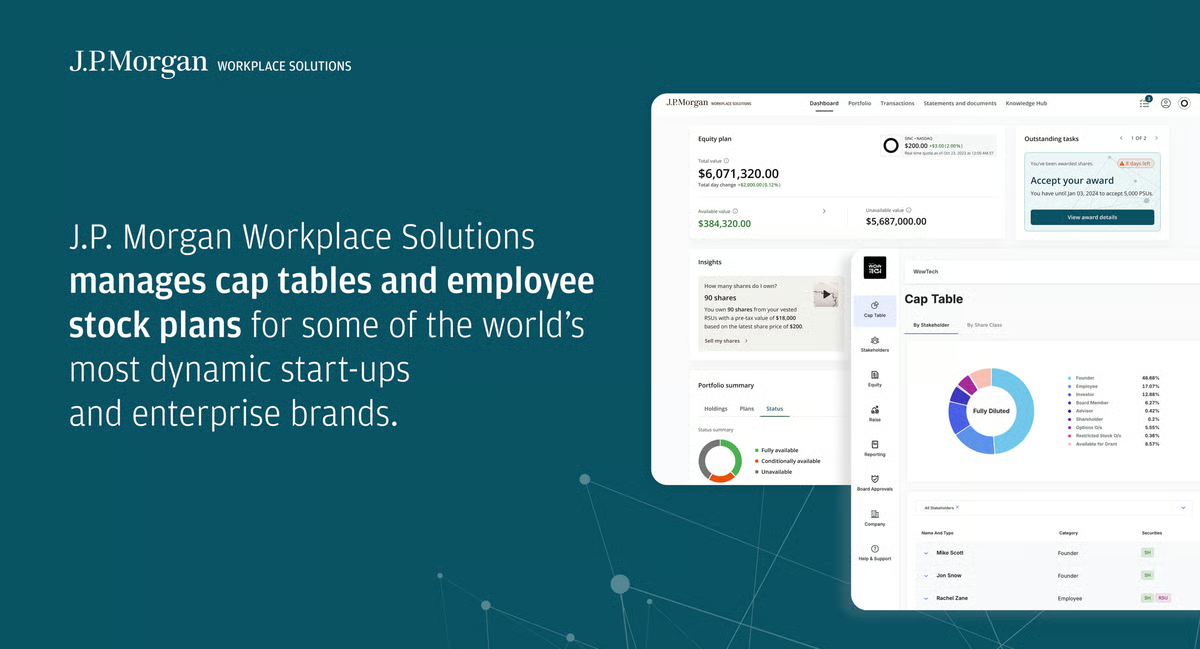
Another aspect, and honestly one of my favorites, is the way information is presented across the system. Visualization holds a 94% rating, and that tracks with what users are saying: you get a genuine bird’s-eye view of your equity structure, dilution included, without things getting cluttered or confusing. For founders trying to make sense of ownership decisions on the fly, that kind of clarity is a bigger deal than it sounds.
Support stands out consistently across G2 reviews. Reviewers describe a knowledgeable onboarding team, responsive customer success contacts, and a setup process that feels guided rather than handed off. For teams handling equity administration for the first time, that structured support reduces the operational risk of getting something wrong during initial configuration.
What I found genuinely impressive through the G2 feedback is how much operational clutter the platform manages to cut out. Investor records, equity tracking, and fundraising preparation all live in one accurate place, document organization and file sharing work the way you’d want them to, and your stakeholder records stay accessible without the usual chaos of disconnected systems. Valuation workflows sit in the same environment, too, so moving through a funding event doesn’t mean juggling separate tools just to handle your 409A needs.
Another thing worth highlighting is how startup-friendly the overall package is. G2 reviewers specifically highlight pricing that works for early-stage businesses, alongside an autonomous task execution score of 67% that reflects a platform designed around guided, supported workflows rather than full automation. For lean teams, that structure works in their favor.
I found that G2 users flag that the cap table doesn’t sync directly with third-party systems, meaning exporting records and syncing equity data outside the platform requires manual steps. 409A valuations are handled by external providers rather than natively, which is most noticeable for teams in active fundraising. Core cap table and stakeholder management remain dependable throughout.
G2 feedback also flags that exit waterfall analysis and multi-round modeling beyond the next funding event are not available natively. Teams approaching a liquidity event will feel this most, though standard round modeling and dilution tracking remain reliable for most early-stage workflows.
J.P. Morgan Workplace Solutions is the strongest fit for early-stage companies that want accurate cap table management, clear stakeholder visibility, and structured onboarding support, without the implementation complexity of a platform built for later-stage equity programs.
What I like about J.P. Morgan Workplace Solutions:
- The onboarding and support are excellent, guiding startups through setup and cap table population. This works especially well for early-stage companies needing smooth adoption.
- Cap table management and scenario modeling are clear and reliable, consolidating ownership and funding rounds in one interface. It suits finance and legal teams managing growing cap tables.
What G2 users like about J.P. Morgan Workplace Solutions:
“What I like best about J.P. Morgan Workplace Solutions is how startup-friendly and intuitive the entire platform is. The pricing works extremely well for early-stage companies, the interface is incredibly user-friendly, and the features cover everything we need for clean, professional cap table management. The onboarding was seamless”
– J.P. Morgan Workplace Solutions review, Joseph K.
What I dislike about J.P. Morgan Workplace Solutions:
- G2 reviews flag that the cap table doesn’t sync with third-party systems, and 409A valuations are handled externally, most noticeable during active fundraising. Core cap table and stakeholder management remain dependable throughout.
- I saw G2 users flag that exit waterfall analysis and multi-round scenario modeling are not available natively. Teams approaching a liquidity event will feel this most, though standard round modeling and dilution tracking remain reliable for most early-stage needs.
What G2 users dislike about J.P. Morgan Workplace Solutions:
“I think there is a need to build the ability to integrate with other data room components and address milestone-based vesting schedules.”
– J.P. Morgan Workplace Solutions review, Reginald M.
Running equity programs that feed into board reporting and investor governance? The best board management software on G2 covers platforms that keep stakeholders aligned on decisions, documents, and ownership at the board level.
2. Eqvista: Best for cap table and valuation management
Eqvista brings ownership tracking, stock option plans, cap tables, valuations, and reporting into one structured environment. What stood out to me across G2 review data is how consistently founders, finance teams, and investors describe it as the system that makes complex ownership structures legible without requiring additional tools to fill the gaps.
Reporting is one of Eqvista’s defining strengths, rated at 98% on the G2 Spring 2026 Grid Report, exceptional against any category benchmark. Teams get access to highly detailed equity reports that simplify ownership tracking and funding analysis. Whether you are preparing investor updates or internal financial reviews, that structured data gives you something to work with confidently.
Another area that genuinely surprised me is the valuation capabilities. Eqvista handles equity valuations and compliance requirements directly within the platform rather than pushing you toward external tools. The 409A feature carries a 98% rating, and after going through the G2 reviews, that score makes complete sense. For growing companies that need valuation workflows to run reliably without added overhead, that is a significant advantage.
Based on my evaluation of G2 feedback, the dashboard brings key equity metrics together in one place, and at 98%, is one of the highest-rated features on the platform. Ownership distribution, employee grants, investor allocations, all visible without digging through complicated menus. If you have ever wasted time hunting for basic equity information across a clunky interface, you will appreciate exactly what that score represents.
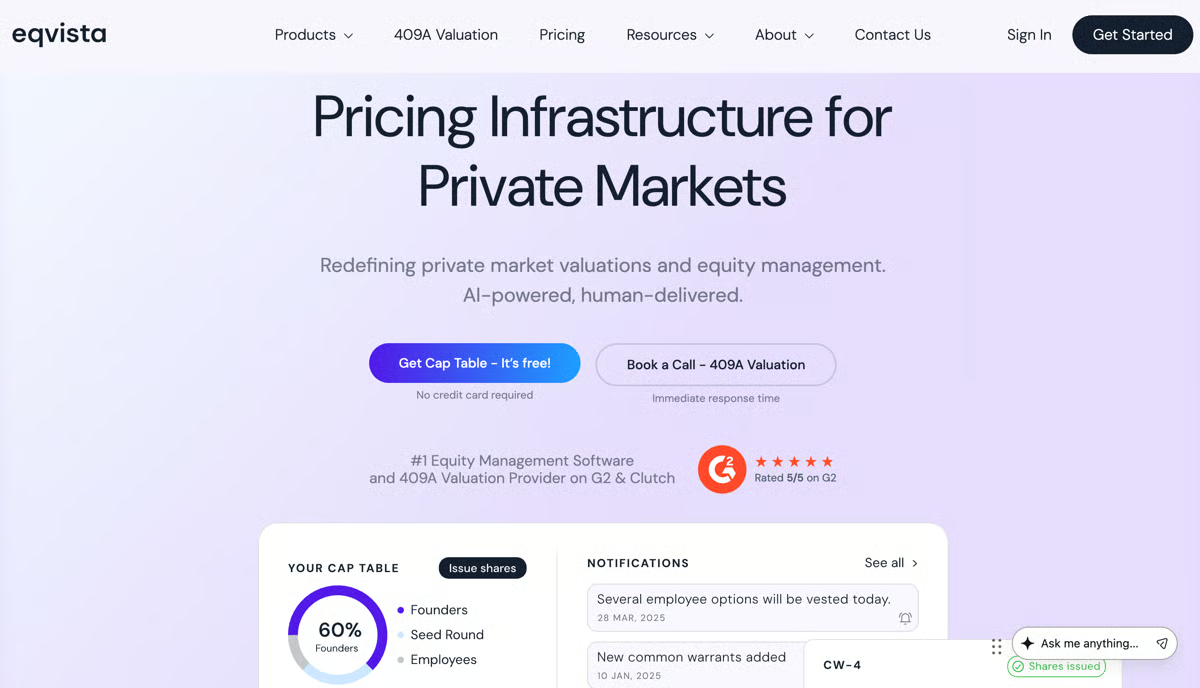
If you are a founder explaining equity incentives during a recruiting conversation or a compensation discussion, that visual clarity makes a genuine difference. platform search holds a 93% rating too, so as your ownership records, grants, and reporting data grow, finding what you need stays straightforward rather than becoming its own project.
What I noticed consistently across verified G2 reviews is how much operational drag disappears once equity moves into a centralized system. Routine updates that would otherwise require hours of spreadsheet work run automatically. Document sharing keeps records organized and accessible as equity structures grow, and G2 reviewers describe substantial reductions in administrative time once stock plans sit inside the platform.
Transparency across teams emerges as a meaningful benefit beyond administration. G2 review data shows employees gaining a clearer understanding of how their stock options connect to company growth and valuation, a visibility that reviewers describe as strengthening alignment between performance, long-term incentives, and overall company direction.
I saw that G2 user feedback points to a recurring consideration around external connectivity: linking equity data with HR, payroll, or analytics platforms requires additional setup not fully handled within the system. Teams with tight data flows between equity records and broader people operations tools will notice this boundary most. Core cap table, valuation, and reporting workflows remain robust throughout.
G2 feedback on reporting dashboards points to a narrower range of customization than expected when preparing investor updates or stakeholder presentations. Finance teams working with complex equity structures or large stakeholder groups are most likely to want additional flexibility here. Core reporting covers the needs of most small and mid-market teams dependably, with cap table and valuation data remaining clearly structured and accessible throughout.
Overall, Eqvista delivers a highly structured approach to equity administration with powerful reporting, reliable valuation tools, and a clear dashboard experience. The platform simplifies cap table management while improving transparency for founders, employees, and investors alike.
What I like about Eqvista:
- Users highlight Eqvista’s clarity in managing stock options and cap tables, simplifying complex ownership structures and reducing manual work. It works well for small to mid-market companies scaling quickly.
- Reviewers appreciate the intuitive interface and real-time updates, which make equity administration straightforward and support transparency for non-finance team members.
What G2 users like about Eqvista:
“As a CEO and SEO strategist, I evaluate tools through the dual lens of systematic efficiency and data integrity. What I value most about Eqvista is its deterministic approach to cap table management. It replaces the inherent formula risk and instability of manual spreadsheets with a high-fidelity, digital source of truth. The mathematical accuracy of its round modeling and waterfall analysis is impeccable; it handles complex dilution scenarios and vesting logic with a level of rigor that is essential for institutional-grade governance. From a strategic perspective, the platform provides a structured ecosystem where all equity data is centralized, audit-ready, and consistent, which is crucial for maintaining a clean corporate data model during rapid scaling.”
– Eqvista review, Bastian G.
What I dislike about Eqvista:
- Connecting equity data with external HR and payroll platforms requires additional setup, which is more noticeable for teams that depend on tightly connected people operations systems. Organizations focused primarily on cap table management and valuations align well with the platform’s core strengths.
- G2 reviews note that reporting dashboard customization is more limited for complex investor reporting needs. For standard reporting, cap table visibility, and day-to-day equity administration, the platform remains reliable and easy to use.
What G2 users dislike about Eqvista:
“While the equity engine is remarkably secure, from an InfoSec and compliance audit perspective, I would like to see a more advanced activity logging and audit trail dashboard. As we manage high-stakes client data, the ability to generate time-stamped, granular logs of every change made to the cap table and export these directly for internal compliance audits would be a major efficiency gain. Furthermore, I would appreciate the addition of a policy-based access control (PBAC) module, allowing us to define even more rigid permissions, which would align perfectly with the high-security frameworks we implement for our advisory clients.”
– Eqvista review, Jayson E. S.
3. Qapita: Best for startup cap table and ESOP management
Qapita is built for companies that want a structured, governed approach to ESOP and cap table administration. What stood out in G2 review data consistently is that growing businesses find it gives them a clearer, more controlled view of ownership as headcount and stakeholder complexity increase, without the fragmentation that comes from managing equity across disconnected tools.
Navigation and interface quality are where G2 reviewers most consistently start their praise. The dashboard is rated at 90% on G2, and the feedback reflects that score, reviewers describe a workspace that keeps the details they actually need within easy reach without requiring significant platform familiarity to use effectively.
Another area where I see G2 reviewers clearly impressed is how well the platform presents ownership information. Visualization holds a 90% rating, and if you’ve ever tried to make sense of complex equity data in a spreadsheet, you’ll appreciate why that matters. That clearer presentation helps companies replace confusing manual records with something far more structured and readable.
Support quality surfaces as a consistent theme across G2 sentiment analysis for this platform. Reviewers describe prompt guidance, patient onboarding assistance, and a team that stays available when customisation or clarification is needed. For companies setting up formal equity processes for the first time, that responsiveness reduces the risk of configuration errors that are expensive to unwind later.
What I find compelling in the G2 feedback is how consistently reviewers praise Qapita’s ability to centralize end-to-end ESOP management. Grants, allotments, records, and employee visibility managed from a single platform instead of disconnected files and manual updates is something teams clearly appreciate. If you’ve dealt with the chaos of fragmented equity records before, you’ll know exactly why that matters.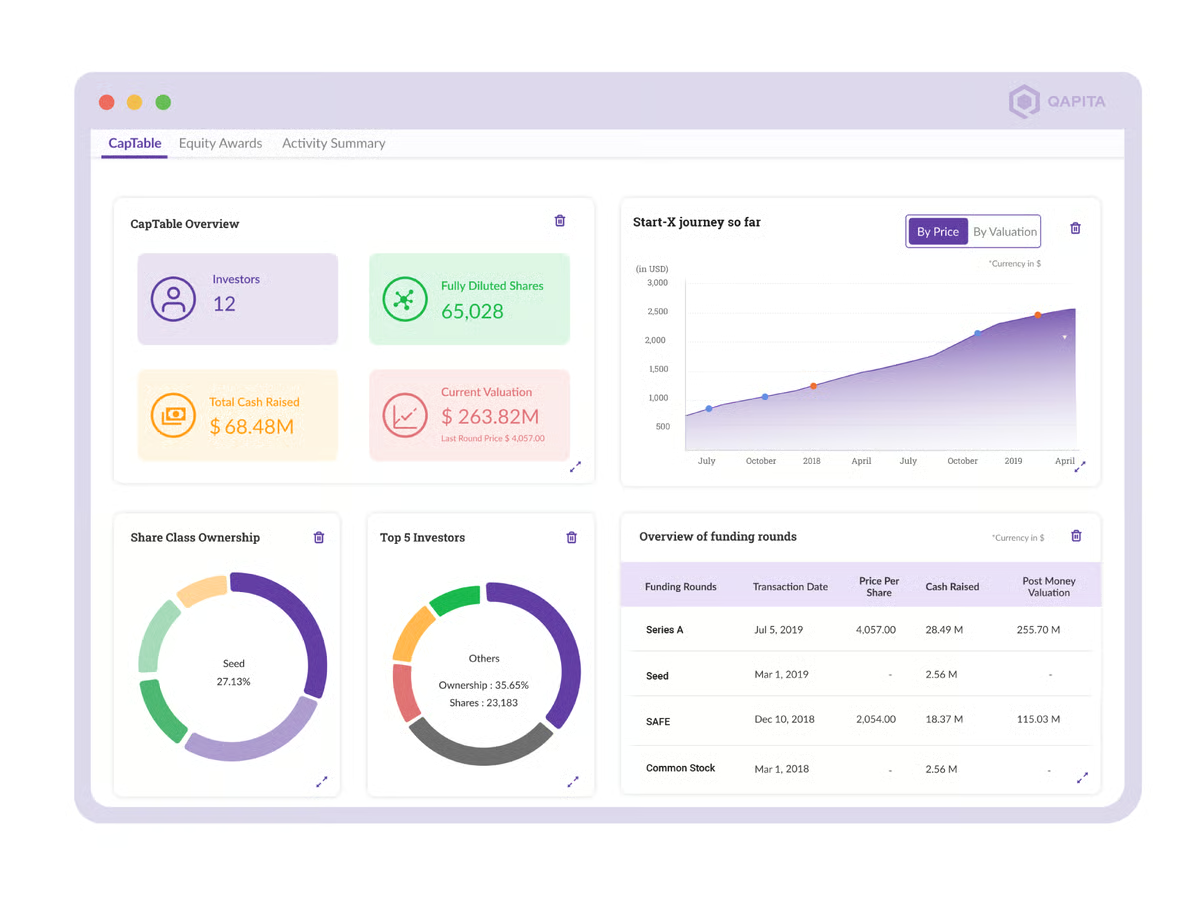
If you’ve ever spent too long wrestling with spreadsheet-based equity processes, this is where G2 users get particularly enthusiastic. System-generated updates, easier tracking, and fewer clerical issues when preparing grant letters or reviewing records are what users describe as moving to when they switch to Qapita. Document sharing continues to develop alongside the platform’s strong core administration capabilities, and I think that trajectory is worth paying attention to
The reviews also show solid confidence in how the platform supports compliance, reporting, and ownership control, with equity governance rated at 90%. For organizations that need reassurance around audit readiness and accurate records, that governance layer strengthens the product’s appeal.
G2 user reviews flag that verifying certain records across stakeholders requires steps outside the platform. This is more noticeable for operations teams managing larger, multi-stakeholder ownership structures, while organizations focused on day-to-day cap table and ESOP administration align well with the platform’s centralized record management. Core ownership and ESOP data remain well organized and reliably accessible throughout.
G2 review data also points to configuration and reporting customization covering a narrower range than teams with highly specialized equity structures may expect. This is more noticeable for finance teams with complex reporting or governance requirements, while organizations managing standard cap table and ESOP workflows align well with the platform’s core functionality. For most growing companies, the available reporting and administration capabilities remain dependable and fit for purpose.
All in all, Qapita is the strongest fit for growing companies that need ESOP administration to be accurate, auditable, and straightforward to use. I’d recommend it for growing companies that need equity management to be accurate, auditable, and actually usable day-to-day.
What I like about Qapita:
- The platform is user-friendly, with a clear dashboard that makes navigating equity and ESOP data simple. Support is responsive, making onboarding smooth for early-stage companies.
- The setup is intuitive, allowing teams to self-onboard easily while confidently managing grants, vesting, and cap table updates.
What G2 users like about Qapita:
“Qapita simplifies ESOP management with a clear, structured platform. The biggest upside is transparency and ease of administration, from grants and vesting to reporting and employee communication. It reduces manual effort, ensures compliance, and gives employees clear visibility into their equity.”
– Qapita review, Amit S.
What I dislike about Qapita:
- Verified G2 reviews note that cross-checking certain records outside the platform can add extra steps, which is more noticeable for teams managing large, multi-stakeholder ownership structures. Organizations focused on standard cap table and ESOP administration align well with the platform’s centralized management approach. For day-to-day equity management, reviewers consistently describe the platform as reliable and easy to maintain.
- G2 reviews suggest that configuration and reporting customization are more limited for highly specialized equity structures. This is more noticeable for organizations with unique governance requirements, while growing companies with standard cap table align well with the platform’s core functionality. The available reporting and administration tools cover the requirements they encounter most often.
What G2 users dislike about Qapita:
“I don’t have any major concerns overall. One area that could be improved is offering more customization options and broader integrations, especially a seamless link with platforms like Keka. That would help data flow more smoothly and make the overall experience even more efficient.”
– Qapita review, Anvi B.
Governance doesn’t stop at ownership records. Audit management software on G2 is worth a look for teams managing compliance documentation alongside equity.
4. Cake Equity: Best for founder-friendly equity tracking
Cake Equity is built for companies that want a simple, approachable way to manage ownership, shareholders, and employee options. If you are a startup that needs clarity without a bulky setup process, this one was designed with you in mind. The design leans heavily into usability, making key equity information easy to understand at a glance. For teams moving away from spreadsheets or more cumbersome systems, it’s refreshingly straightforward.
Cap table functionality is rated at 94% on G2, comfortably ahead of the category average. I noticed that G2 reviews describe clean, dependable equity records from the start, with valuation workflows sitting within the same environment rather than routing teams toward separate tools. That consolidation removes a layer of coordination overhead that early-stage finance teams feel clearly during active fundraising.
What I kept noticing in G2 reviews is how much people appreciate the interface. Clean, intuitive, easy to find your way around. Equity administration has a reputation for being dense and confusing, and Cake Equity seems genuinely committed to changing that. The 93% dashboard score on G2 reflects an overview experience that is not just attractive but genuinely useful in practice.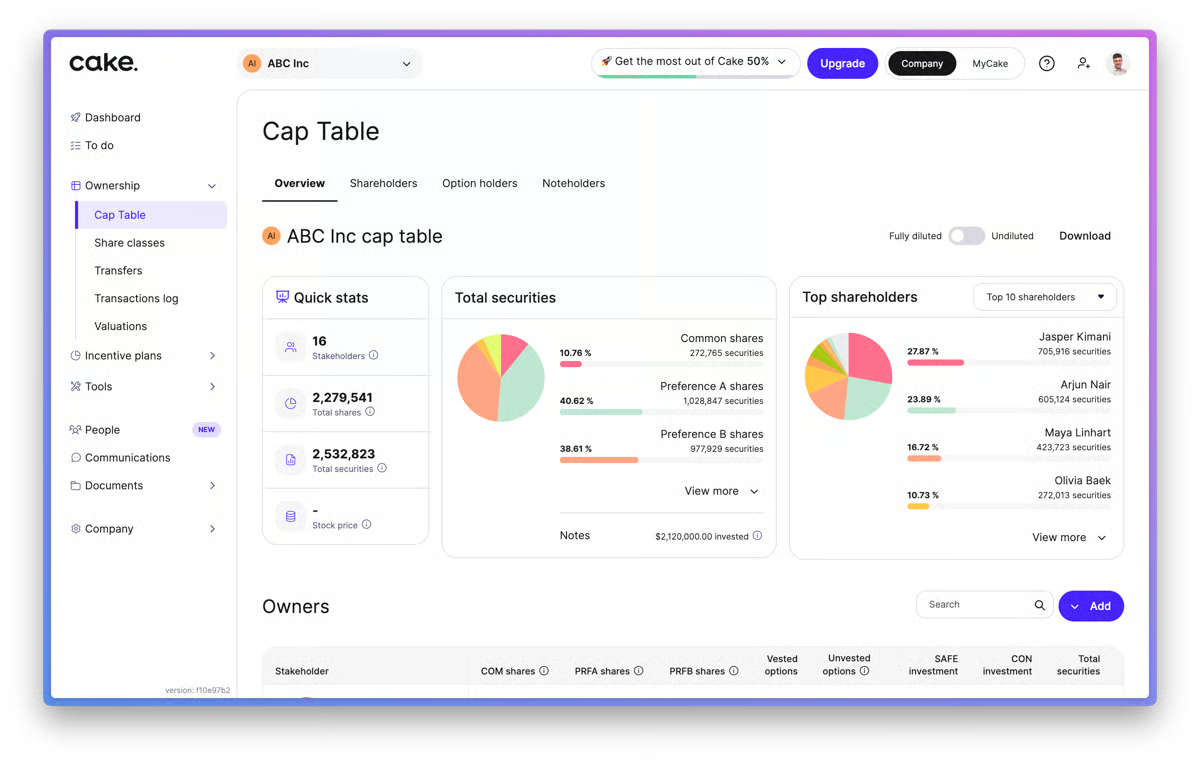
Platform search holds a 92% rating, ahead of the category average, and G2 review data reflects why that matters as equity records grow. Founders, finance teams, and investors describe finding ownership details, grant records, and reporting data quickly, without the search friction that compounds as cap table complexity increases.
Support quality adds another layer of value to the overall experience. I saw that G2 reviews regularly mention the team’s willingness to guide users through setup and explain details clearly, which is especially helpful for companies setting up equity processes for the first time. That human support makes the platform feel more welcoming and practical from day one.
Affordability is another reason Cake Equity left such a positive impression. I saw G2 reviews consistently describe it as cost-efficient for early-stage companies. Document organization keeps stakeholder records accessible within the platform, reducing external file management as your cap table grows. For founders who want structured, guided support while scaling, that balance works well.
Investor visibility is where the platform extends value beyond internal administration. Based on my evaluation, G2 reviews describe a polished shareholder portal where investors can log in, review their holdings, and stay connected to updates without requiring manual outreach. For teams managing diverse stakeholder groups, that organised transparency reduces the coordination overhead of keeping investors informed.
Some G2 reviewers mention that response times for live support can be longer than expected, which is most noticeable during time-sensitive setup or implementation phases. Teams with lighter or less frequent support requirements are less likely to encounter this, while the platform’s core cap table management, investor visibility, and document organization align well with early-stage equity workflows.
G2 feedback also notes that access to legal templates and broader functionality is more limited at lower pricing tiers. This is most noticeable for companies expanding equity programs and managing a growing number of optionholders, while early-stage organizations align well with the platform’s core equity management capabilities and streamlined ownership tracking.
Honestly, Cake Equity is doing a lot of things right. Cap table accuracy, a dashboard your whole team can navigate, and investor visibility that keeps stakeholders genuinely informed. It is built for startups, and it shows in the best possible way.
What I like about Cake Equity:
- Reviewers praise Cake representatives for guiding teams through setup, making onboarding straightforward for small teams and early-stage founders.
- Users appreciate the system’s simplicity and clarity, with dashboards that allow investors and teams to quickly see key equity information.
What G2 users like about Cake Equity:
“It’s got what I need at a price that makes sense for an early stage founder. I’m able to scale it with the business, track my cap table, model dilution etc. it just makes it really easy to understand the equity side which can be confusing when you first start planning everything out.”
– Cake Equity review, Paloma N.
What I dislike about Cake Equity:
- G2 user feedback flags that reaching a live support representative can take longer than expected, with waits of a day or more noted during active setup phases. Early-stage founders with lighter, less time-sensitive support needs find the core cap table tools and investor visibility run smoothly without frequent intervention.
- Verified reviews on G2 point to base tier access covering a narrower range of legal templates and broader functionality than expected as optionholder counts grow. For early-stage companies whose equity programs are still straightforward, reviewers consistently describe the platform as strong value for money, with core equity tools delivering reliably within what that stage actually needs.
What G2 users dislike about Cake Equity:
“The layout and configuration change frequently. I suppose that’s the trade-off for having new features released on a regular basis.”
– Cake Equity review, Sean Q.
5. Carta Equity Suite: Best for full lifecycle cap table management
Carta Equity Suite has become one of the most widely adopted equity management platforms because of its core capabilities. Several companies run their cap table accuracy, 409A compliance, grant automation, and HRIS integrations through the platform. What G2 review data shows is that this maturity translates into dependable day-to-day execution rather than just a strong feature list.
Cap table functionality is rated at 91% on G2, sitting comfortably above the category average. What stood out to me is how the G2 reviews describe it as a reliable single source of truth for ownership data, clear visibility into vesting schedules, and cap table changes that propagate without manual chasing. For leadership and board-level reporting, that structural reliability builds real confidence in equity accuracy.
409a valuations are one of those things that can quietly eat up a lot of administrative time if your tools are not set up well. Carta rated 89% here, above the category average, and I saw that G2 feedback back that up. Compliance requirements and equity records sitting together in one place removes a layer of effort that finance teams will genuinely appreciate.
Another highlighted aspect in most G2 reviews is the consistent dashboard praise. Clean, intuitive, and organized in a way that makes daily equity tracking manageable without a steep learning curve. Whether you are in finance or HR, finding what you need does not feel like a hunt. The 89% dashboard rating reflects that. Platform search at 83% suggests the foundations are solid, with room to grow as the platform evolves.
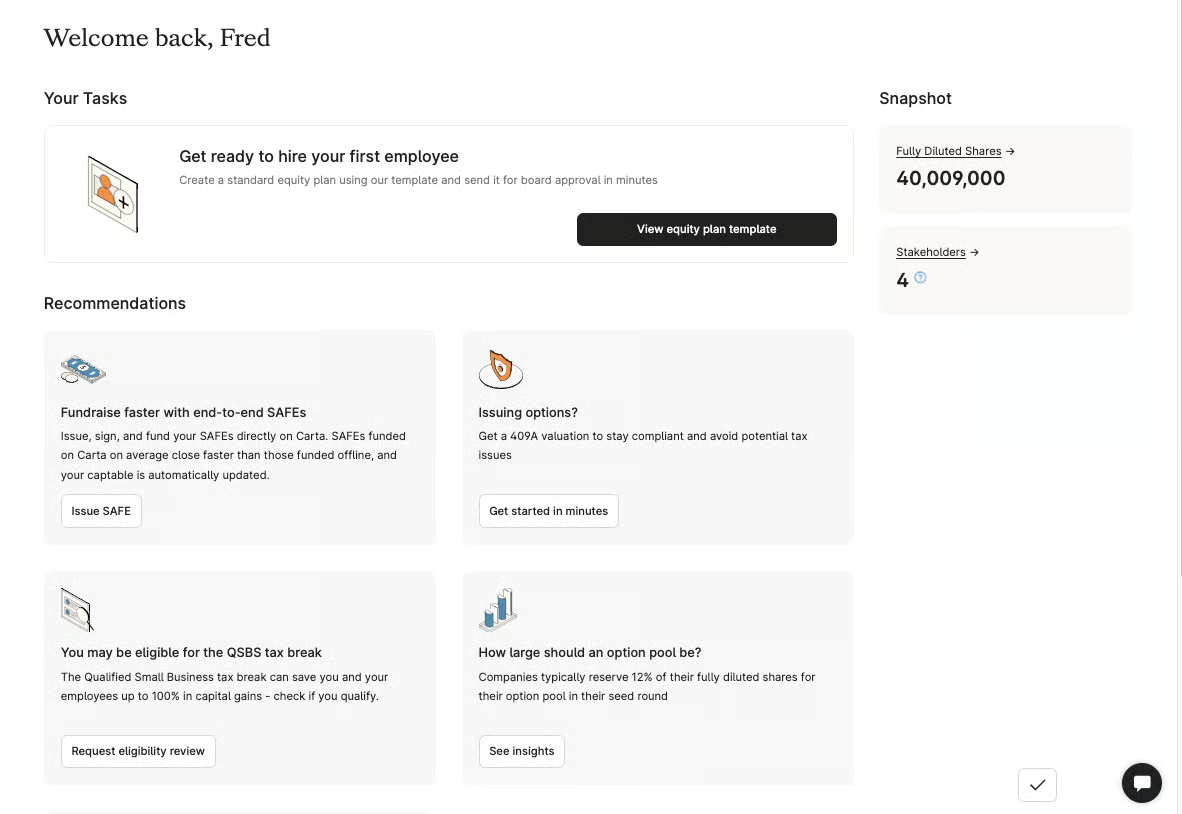
Carta removes much of the friction traditionally associated with issuing option grants and tracking vesting. Automated processes reduce manual errors compared to spreadsheet-based systems, handling routine equity actions reliably across HR and finance workflows. Document sharing and file organization work within the same environment, keeping records accessible as equity programs grow in complexity.
One thing worth highlighting from the G2 reviews is how naturally Carta fits into a broader tech stack. HRIS integrations mean compensation and employee data syncs across systems without extra manual steps. That reduces duplication and keeps accuracy intact across HR and finance. As equity programs scale, that kind of connectivity stops being a nice-to-have and becomes genuinely important.
Carta puts real effort into making equity understandable for everyone, not just administrators. G2 reviewers describe employees clearly seeing their ownership and tracking equity value without needing a finance background to interpret it. That transparency builds trust, and it came up consistently enough in reviews that it is clearly not a minor detail. A stronger culture of ownership tends to follow when people actually understand what they hold.
G2 reviewers note that locating specific reports or granular ownership records is more noticeable in complex, multi-round equity structures than in straightforward cap table environments. Teams managing simpler ownership models align well with the platform’s broader dashboard experience and day-to-day equity management workflows.
G2 reviews also highlight that termination processing and multi-event tracking become more prominent considerations as equity programs scale across grants, stakeholders, and funding rounds. This is most noticeable in high-volume equity environments, while organizations focused on everyday equity administration align well with the platform’s core automation and ownership management capabilities.
Overall, Carta does not try to be everything, and that works in its favor. For growing companies that want their equity house in order and their stakeholders confident, Carta is a great option.
What I like about Carta Equity Suite:
- Carta provides a reliable source of truth for equity ownership, giving leadership and finance confidence in reporting and strategic decisions.
- Multiple integrations with HRIS and payroll streamline employee data access, reducing manual work and improving workflow efficiency.
What G2 users like about Carta Equity Suite:
“Carta makes it simple to manage our equity, cap tables, and employee option grants in one place. The UI is clean and easy for us to navigate. I also appreciate how quickly we can issue grants, track vesting, and maintain accurate ownership records without relying on manual spreadsheets.”
– Carta Equity Suite review, Zak S.
What I dislike about Carta Equity Suite:
- G2 reviewers note that locating specific reports or granular ownership records takes more time as cap table complexity grows. For companies managing straightforward ownership structures and standard funding rounds, the dashboard and core navigation remain clean and accessible for everyday equity tasks.
- G2 review data points to advanced workflows such as termination processing becoming more manual as equity programs scale. For teams with established equity operations and standardised grant processes, core automation handles the most common tasks reliably, and the platform’s depth across cap table accuracy, compliance, and integrations continues to deliver where it matters most.
What G2 users dislike about Carta Equity Suite:
“While Carta offers an exciting work environment, the company’s fast-paced and ever-changing nature can lead to rapidly shifting priorities. This sometimes makes it difficult to maintain clarity or achieve a healthy work-life balance. Nevertheless, these challenges are indicative of the company’s growth phase and its dedication to ongoing innovation.”
– Carta Equity Suite review, YASH A.
6. Fidelity Private Shares: Best for private market equity management
If you want equity operations that feel structured without becoming a project in themselves, Fidelity Private Shares was built with that in mind. Based on my evaluation of G2 review data, the platform consistently earns its strongest feedback from smaller teams and early-stage companies that want ownership records, investor documents, and valuation workflows organised in one environment without a complex implementation process.
If structured equity tracking, employee issuance, and investor record management are priorities for your team, the G2 ratings here are hard to ignore. With equity governance rated at 94% on G2, the platform delivers dependable performance across core ownership workflows, and cap table administration holds up consistently when fundraising and compliance reviews are in play.
Visualization scores 94%, and G2 reviewers are clear about why. The dashboard is clean, documents are well laid out, and equity details are easy to find without digging. From what I found in G2 reviews, for smaller teams that need to understand their equity position quickly rather than work through a maze of tabs and files, that visual clarity is more valuable than it might sound.
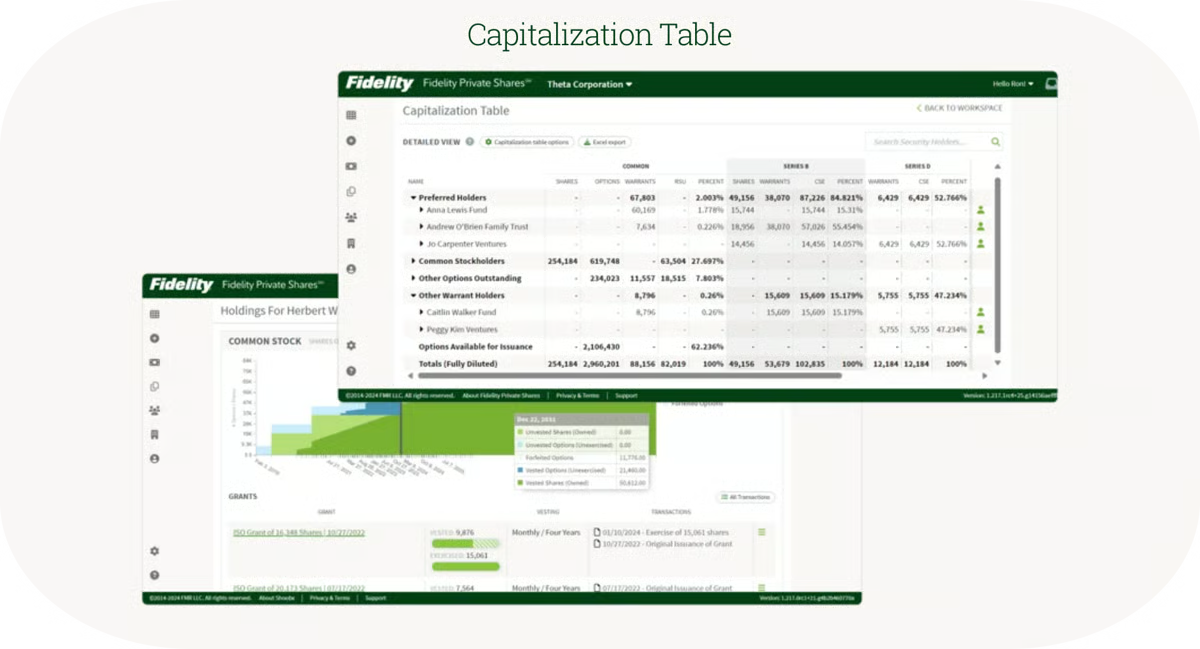
G2 users are also consistent on one thing: the support team is excellent. Responsive, knowledgeable, patient, and quick to help, with specific praise for staff who keep things accurate and moving efficiently. That level of attentiveness gives the platform a genuinely human feel. If you are navigating onboarding for the first time, having that kind of support behind you makes the whole process far less intimidating.
Another plus is how effectively Fidelity Private Shares acts as a central home for important records. Teams use it to organize investor data rooms, NDAs, convertible notes, SAFE notes, stock options, and related company documents without spreading information across disconnected systems. Based on my evaluation, 409A scores 90% on G2, reflecting that valuation compliance sits within the same structured environment and keeps day-to-day administration consolidated and easier to manage.
What stood out to me in the G2 reviews is how often reviewers mention how manageable the setup process feels. Intuitive navigation, helpful documentation, and a platform that does not assume you already know what you are doing. For founders and startup operators handling equity administration for the first time, that approachable experience is not a small thing.
Pricing accessibility also makes the platform a practical choice for early-stage companies managing equity on tighter budgets. Reviewers describe the cost structure as competitive, noting that the value delivered through hands-on support and a robust document environment outweighs comparably priced alternatives. For founders where both capability and cost matter, that combination strengthens the overall case considerably.
While overall feedback is strong, G2 reviewers note that investor invitations occasionally land in spam folders or create login friction for external stakeholders. Teams coordinating active fundraising with a large number of outside investors will notice this more than those managing a smaller, stable stakeholder group. The platform’s internal organization of ownership records, investor materials, and supporting documentation aligns well with maintaining visibility across ongoing investor relations workflows.
A few recurring themes in G2 reviews suggest that certain workflows and platform features feel more structured than teams with complex equity arrangements expect. Navigation within some processes is more noticeable for organizations managing sophisticated ownership structures, and some reviewers highlight the value of dedicated customer success support in these environments. For straightforward equity administration, the platform aligns well with day-to-day ownership management and governance workflows.
Fidelity Private Shares is the kind of platform that makes me wonder why equity management ever felt so painful. Governance that holds up under pressure, visualization that actually makes sense, and a support team that reviewers genuinely rave about. Everything organized, everything accessible, no chasing records across disconnected systems.
What I like about Fidelity Private Shares:
- G2 reviewers praise the support team for guiding setup and onboarding efficiently, making the platform accessible for small teams and early-stage startups.
- Users highlight the intuitive dashboard and clear documentation, making it easy to track equity, grants, and investor records without manual reconciliation.
What G2 users like about Fidelity Private Shares:
“I love the team at Fidelity Private Shares. They were amazing and helped us tremendously. Their knowledge made it so easy to onboard and get everything organized. The team really held our hand through every step of the process, guiding us effectively. The platform is also far more robust compared to the previous tool we used, with links to every single document, enabling us to close deals quickly. Additionally, the pricing is really good, and the reputation of Fidelity was instrumental in our decision.”
– Fidelity Private Shares review, Laura K.
What I dislike about Fidelity Private Shares:
- G2 reviews note that investor invitations occasionally land in spam folders, adding follow-up steps when external stakeholders need quick document access. For companies with a smaller, stable investor group where outreach is less frequent, internal records and documentation remain well-organised and reliably accessible throughout.
- G2 review data points to scenario modeling covering a narrower range when evaluating complex deal structures before transactions close. For private companies managing straightforward cap table administration and standard ownership workflows, day-to-day equity management remains reliable within those parameters.
What G2 users dislike about Fidelity Private Shares:
“Some portions of the system still need development, but they are generally not high necessity, and the team is responsive to develop fixes.”
– Fidelity Private Shares review, Sarah W.
Comparison of the best equity management software
Software | G2 rating | Free plan | Ideal for |
J.P. Morgan Workplace Solutions | 4.8/5 | No | Early-stage startups and founders needing guided cap table setup, ownership visibility, and structured onboarding support |
Eqvista | 4.9/5 | Yes | Startups and growing companies needing a transparent cap table, native valuation management, and stakeholder reporting |
Qapita | 4.7/5 | Yes | Startups and mid-market companies seeking an intuitive cap table, ESOP tracking, and global compliance workflows |
Cake Equity | 4.8/5 | Yes | Early-stage startups and founders looking for simple, affordable cap table and ESOP administration |
Carta | 4.4/5 | Yes | Startups to mid-market teams needing a comprehensive cap table and full lifecycle equity management |
Fidelity Private Shares | 4.8/5 | No | Small and mid-market companies need secure equity management with strong support and investor access |
*These best equity management software products are top-rated in their category based on G2’s Spring 2026 Grid® Report. All offer custom pricing tiers and demos on request.
Best equity management software: Frequently asked questions (FAQs)
Got more questions? G2 has the answers!
Q1. Which equity management tools offer the most comprehensive cap table and ownership tracking?
Eqvista leads with a 98% dashboard rating and detailed ownership reports. Carta and J.P. Morgan Workplace Solutions follow closely, both rated above the category average for cap table accuracy and real-time ownership visibility.
Q2. How do I compare equity management software for scenario modeling and dilution forecasting?
Look at whether the platform lets you model future funding rounds, visualize ownership changes, and run pre/post-money breakdowns without manual spreadsheet work. Check if scenarios can be saved and exported for board meetings or investor decks. Cake Equity and Carta both handle this well within their cap table tools, making them useful reference points when benchmarking other platforms on modeling depth.
Q3. What equity management solutions provide seamless 409A and valuation management?
Eqvista and Carta both handle 409A natively within the platform, keeping valuation workflows connected to cap table data without external tools. J.P. Morgan Workplace Solutions routes 409A through external providers, so if in-platform valuation management is a priority, Eqvista or Carta are the stronger choices.
Q4. Which equity management tools support employee option grants and vesting schedules?
Qapita, Eqvista, Carta, and Cake Equity all support grant issuance, vesting configurations, and exercise tracking. Qapita is the strongest pick for ESOP-heavy workflows, Eqvista keeps vesting schedules connected to cap table and valuation data natively, and Carta handles high-volume grant automation across HR and finance workflows.
Q5. How do I evaluate equity management software for compliance with SEC and IFRS regulations?
Check whether the platform has built-in audit trails, role-based access controls, and exportable compliance reports rather than relying on external tools. Board approval workflows and data retention policies are also worth verifying. Fidelity Private Shares and Eqvista are the strongest options here, with governance controls built into their core workflows.
Q6. What features should I prioritize when choosing equity management tools for startups versus enterprises?
For startups, prioritize simple onboarding, affordable pricing, and a clean cap table interface. Cake Equity, Qapita, J.P. Morgan Workplace Solutions, and Fidelity Private Shares are all built with lean teams in mind. For enterprises, prioritize multi-entity support, deeper compliance workflows, integration depth, and advanced reporting. Eqvista and Carta are better suited for that level of complexity.
Q7. How do I assess investor portal and stakeholder reporting capabilities in equity management platforms?
Check for secure, self‑serve investor logins, real‑time dashboards, downloadable cap table summaries, and automated alerts. User patterns show teams value tools that reduce ad‑hoc requests by stakeholders, offering clear views into ownership, vesting, and liquidation preferences. Evaluate if reporting is customizable (e.g., filtered by stakeholder group) and whether permissions can be finely controlled.
Q8. Which equity management software integrates with HR payroll and finance systems?
Carta has the strongest integration record, connecting with HRIS and payroll systems to sync employee and compensation data automatically. Eqvista and Qapita support external connections but require additional setup. Before committing to any platform, ask vendors whether data syncs in real time or runs on a batch basis.
Q9. What should I ask about audit trails and security when selecting equity management tools?
Ask whether the platform provides immutable change logs, user activity histories, role-based access controls, multi-factor authentication, and encryption at rest. Also, confirm that logs can be exported for compliance reviews. Fidelity Private Shares and Eqvista are the strongest options for teams where governance and audit readiness are non-negotiable.
Q10. How do I compare equity management solutions on customer support and training resources?
Look for dedicated onboarding specialists, live support hours, and hands-on guidance through complex scenarios, not just a knowledge base. J.P. Morgan Workplace Solutions, Qapita and Fidelity Private Shares consistently receive the strongest support praise in G2 reviews, with OptionTrax reviewers specifically citing technical depth and same-day response times.
Own your equity and manage independently
Equity management looks straightforward until it isn’t, and a wrong ownership number, a vesting schedule nobody can verify, a 409A sitting on a cap table nobody fully trusts, fixing it costs more than choosing the right platform ever would have.
The right platform is the one that holds up when things get complicated, not in the demo, but during a funding round, a compliance review, or an employee asking a question you should already have the answer to.
Pick the one that fits how your team actually works, because when ownership gets messy, and the pressure is on, the platform you chose six months ago is the only thing standing between you and a very expensive conversation.
Want to streamline equity and incentives? Explore top‑rated compensation management software on G2 to automate grants, manage ESOPs, and align rewards with performance.