

If you want to learn how to start a call center, the first thing you should do is have a clear plan before diving in.
It doesn’t have to be expensive or complicated, but you need to consider several key factors to deliver an excellent customer experience and run a successful call center business:
- Identify your niche
- Understand the technology
- Stay compliant with regulations
- Prioritize customer experience
In this guide, we’ll walk you through these steps and more, so that you have all the information you need to set up a productive and profitable call center operation.
What Do You Need to Start a Call Center?
To start a call center, you need agents and phones. But for a successful call center operation, you need the right contact center technology, staffing, workflows, and better customer service processes to handle interactions and scale over time. These are the core components every call center needs:
| What you need | Why you need it |
|---|---|
| A business model or service niche | This helps define your target clients, pricing structure, staffing needs, and overall business direction. |
| Call center software and VoIP phone systems | These systems allow agents to manage calls efficiently, route customers correctly, and handle large call volumes without disruptions. |
| Dependable internet and hardware | Stable connectivity and proper equipment ensure uninterrupted communication and smooth day-to-day operations. |
| Customer relationship management (CRM) tools | CRM tools give agents quick access to customer information, improving response times and personalization. |
| Trained agents and supervisors | Skilled staff is essential for maintaining service quality, resolving customer issues, and managing team performance. |
| Scripts and workflows | Structured processes help agents deliver consistent customer experiences and reduce operational confusion. |
| Security and compliance policies | These policies protect sensitive customer data and help businesses comply with industry regulations and privacy laws. |
| Performance tracking and quality assurance processes | Monitoring KPIs and reviewing interactions helps improve efficiency, agent performance, and customer satisfaction over time. |
These are the core things you need to have, but building and running a successful call center requires more. Let’s learn how to do that step by step.
8 Steps to Starting a Successful Call Center
Here’s a breakdown of the eight key steps on to how to start a call center business to ensure a smooth launch and a successful ongoing operation.
1. Choose your call center type
The first thing to figure out is where your team will be calling from. Here are the most common type of call centers:
On-Premises Call Center
This is a call center that’s in a physical building and is traditionally set up.
- Advantages: Full control over the environment (systems, data security, customization)/
- Challenges: High upfront costs for office space, equipment, and ongoing maintenance.
Virtual Call Center
Call center representatives work remotely from various locations and are connected through cloud-based technology.
- Advantages: Lower costs, easier scalability, and the ability to hire talent globally.
- Challenges: Unreliable internet connection, data security concerns, and potential difficulties in managing remote teams.
Work-from-Home Call Center
Like a virtual call center, a remote call center focuses on agents working from home.
- Advantages: Flexibility for workers, reduced costs for physical space, and scalability.
- Challenges: As with virtual call centers, challenges include unreliable internet connections, data security concerns, and difficulties managing remote teams.
Inbound Call Center
Receives incoming calls from customers about customer service (billing issues, plan changes, returns) or technical support.
- Advantages: Tailored to support new and existing customers and boost customer satisfaction and retention.
- Challenges: Must handle potentially high call volumes, requiring efficient call center agent training and scheduling.

Outbound Call Center
Call agents primarily make outbound calls, often for telemarketing, sales, surveys, or debt collection.
- Advantages: Effective for lead generation, proactive customer outreach, and business development.
- Challenges: Can face strict regulations (e.g., do-not-call lists), and customers may view outbound calls as intrusive.
Blended Call Center
A combination of inbound and outbound call center functions. It manages incoming and outgoing calls efficiently across multiple communication channels.
- Advantages: Efficient use of resources, as agents can switch between tasks (customer inquiries and sales calls) based on demand.
- Challenges: Requires agents to be skilled in both inbound and outbound communication.
Automated Call Center
Uses advanced technologies like interactive voice response (IVR), artificial intelligence (AI), and chatbots to handle most types of customer interaction without the need for human agents or to assist human agents.
- Advantages: Reduces labor costs by automating routine tasks, provides 24/7 customer support, and shortens wait times by offering self-service options.
- Challenges: May frustrate customers who prefer human interactions, and requires significant investment in technology and integration.
Offshore Call Center
Call center operations are outsourced to a different country where labor costs are lower.
- Advantages: Cost savings, access to a larger workforce, and round-the-clock service due to time zone differences.
- Challenges: Cultural differences, potential language barriers, and concerns about service quality.
Omnichannel Call Center
Integrates multiple communication channels (phone, email, live chat, social media) into a single platform, allowing agents to seamlessly switch between channels while interacting with customers.
- Advantages: Provides a unified, consistent customer experience across all channels, which improves efficiency.
- Challenges: Requires advanced software, training, and may be more complex to manage.
Multichannel Call Center
Similar to omnichannel, but the channels (phone, email, chat, etc.) are managed separately, with less integration.
- Advantages: Customers have multiple ways to reach the business.
- Challenges: Lacks the seamless experience of omnichannel, as agents may not have a full view of the customer’s interactions across channels.
So, which one’s right for you? It all boils down to your priorities. For example:
👉 If you want more physical control and have the budget, an on-premise call center might work.
👉 Virtual call center software is ideal for budget-conscious small businesses and startups seeking flexibility, including the ability to have agents across different time zones.
👉 And if you want to provide a seamless customer experience across multiple channels, then an omnichannel contact center could be the way to go — whether you build an in-house team or outsource to a call center company.
Evaluating contact centers? Get the buyer’s guide.
This guide reveals the five pillars of a modern platform, key questions to ask, and red flags to avoid.
Related: Call Center Outsourcing: A Go-To Resource for Outsourcing
2. Define your call purpose and goals
Now take a moment to define your purpose and set some clear call center goals. This will be your comprehensive business plan for success.
First things first, decide what kind of calls your center will handle.
Inbound call centers are those where customers reach out to you for help (think troubleshooting or order inquiries). Outbound call centers involve your team reaching out to others (like for sales, telemarketing, or market research). A blended center tackles both inbound and outbound operations.
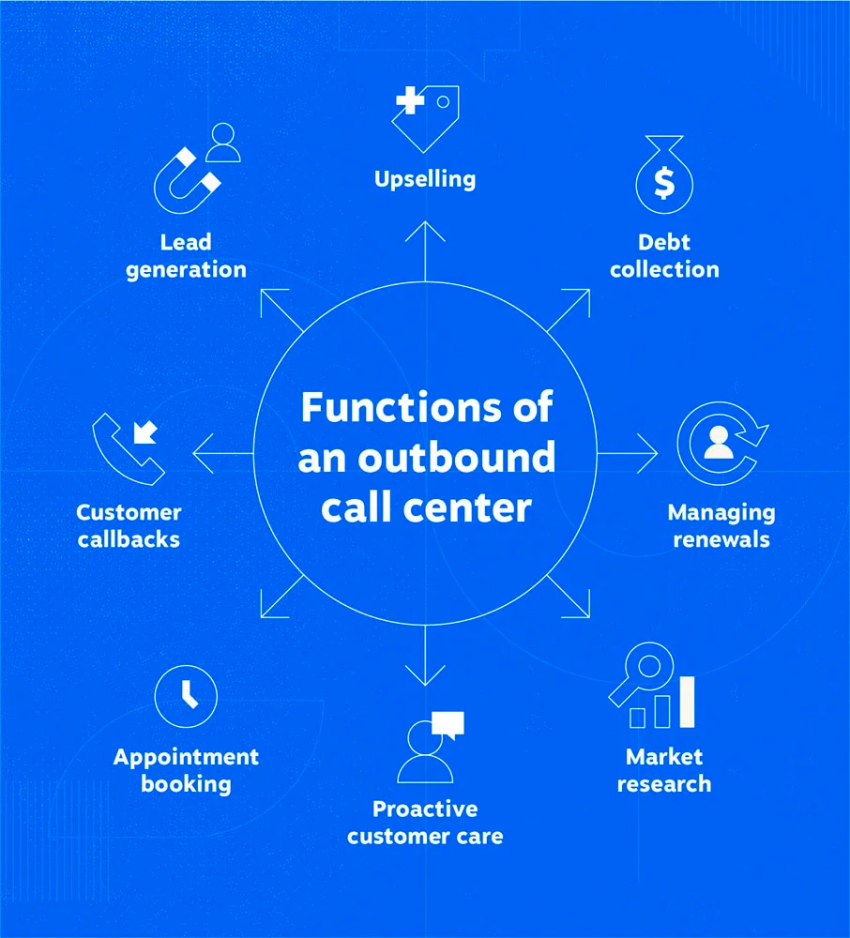
Next, determine the services you’ll offer. Will your call center focus on outbound or inbound customer support, sales, technical support/help desk, or a combination of these? Knowing your service focus will help you decide who to hire and how to structure your operations.
Vague goals like “be awesome” won’t cut it. Set Specific, Measurable, Achievable, Relevant, and Time-bound goals (SMART goals for short). This could involve setting customer service goals like high customer satisfaction rates, faster call resolution times, or exceeding sales targets.
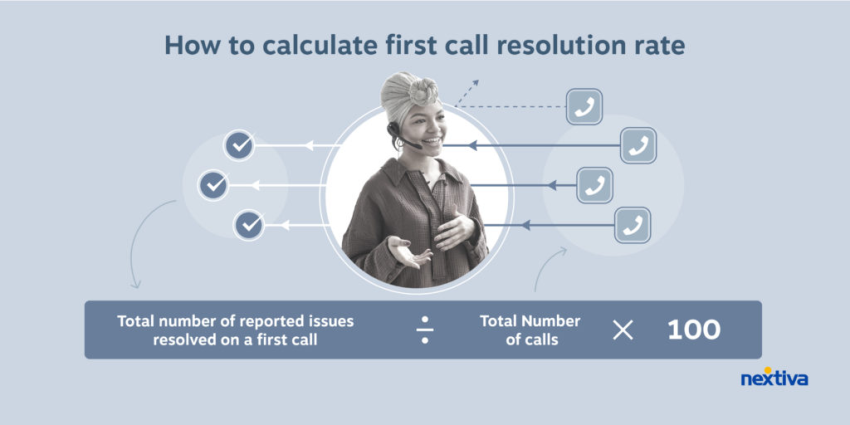
💡 Tip: Do your research. See other call center companies and industry benchmarks for metrics like average handle time (how long a call typically lasts) and first-call resolution rate (how often an issue is solved on the first call). This will help you set realistic goals for your own call center.
3. Plan your budget
Building a sustainable call center requires careful budgeting, so be smart with your money.
So, how much does it cost to start a call center business? This can vary widely depending on the type of call center, size, and location. But to give you a few examples:
- Inbound Call Center: Start-up costs can be around $5,000, including hiring staff, renting space, and purchasing equipment.
- Outbound Call Center: Start-up costs can be around $10,000, which includes most of the same things as inbound (hiring staff, renting space, and purchasing equipment).
- Blended Call Center (Inbound & Outbound): Start-up costs can be around $15,000, which includes the same things as inbound and outbound (hiring staff, renting space, and purchasing equipment).
- On-Premise Call Center: For a small- to medium-sized on-premise call center, the set-up cost might range from $10,000 to $50,000, covering equipment, software, and infrastructure. approximately $15,000 to over $50,000, depending on the scale and specific needs.
- Cloud-Based or Virtual Call Center: The upfront costs will be lower than on-premise, and can range from around $1,000 to $13,000, depending on the service provider and scale.
And then there are the ongoing monthly expenses, including:
- Equipment: You’ll need reliable phone lines, phone numbers, and business phone systems to keep both outgoing calls and incoming calls flowing smoothly, not to mention dedicated computers and laptops for your call center agents. Call center hardware like phones and headsets can run about $50 each, while computers or laptops can be anywhere from $300-$2,000.
- Technology: Call center software with advanced features like automatic call distribution (ACD for smart call routing) and interactive voice response (IVR for letting customers solve simple issues themselves) is also essential. Call center software is about $120 per user per month, and network infrastructure (routers, firewalls, etc.) costs around $2,000.
- Physical office: If you’re setting up a physical call center, factor in renting or buying office space, furniture, supplies, and utilities. (Even virtual setups require comfortable workstations and headsets for your agents.) Renting a small call center office can be around $2,500 per month.
- Employees: Salaries, benefits, and training for your staff all need to be budgeted for. The average (this includes entry-level to experienced) call center agent salary is about $31,200.
We estimate that the staffing cost for a 20-person call center is about $694,000 annually.
💡 Tip: Get quotes from different vendors for everything from phone systems to call center software and headsets. Consider cloud-based call center solutions, which can be more scalable and potentially save you money in the long run.
4. Choose the right technology
The right tech keeps your agents happy and productive and enhances your customer experience. Now that you’ve got your strategy figured out, it’s time to deck out your call center with the right technology:
- A reliable business phone system: Invest in a dependable Voice over Internet Protocol, or VoIP phone system. This will ensure that your agents and customers can hear each other loud and clear, no matter where they are.
- Call center software: It’s your call center’s brain. Choose a cloud call center to minimize the hassle of maintaining costly infrastructure.
- CRM integration: This will give agents instant access to customer history, tickets, notes, and previous interactions so they can deliver faster and more personalized support.
- Workforce management tools: Consider using workforce management tools to streamline scheduling and optimize staffing levels in real time based on call volume.
- Agent essentials: Provide your agents with high-quality computers, automated tech like predictive dialers, noise-canceling headsets for clear audio, and comfortable workstations to energize them throughout their shift.
- Analytics dashboards: Give real-time visibility into metrics like service level, average handle time, abandonment rates, and agent performance.
- Call recording software: Helps improve quality assurance, compliance monitoring, dispute resolution, and agent coaching.
- AI-assisted automation tools: Automate repetitive processes like call routing, summaries, customer inquiries, and quality monitoring so agents can focus on more complex customer interactions.

Essential call center software features
Modern call center platforms include advanced tools that improve customer experience, reporting visibility, and operational efficiency, such as:
- Automatic call distribution (ACD): Routes incoming calls to the most appropriate agents based on availability, skill set, or priority.
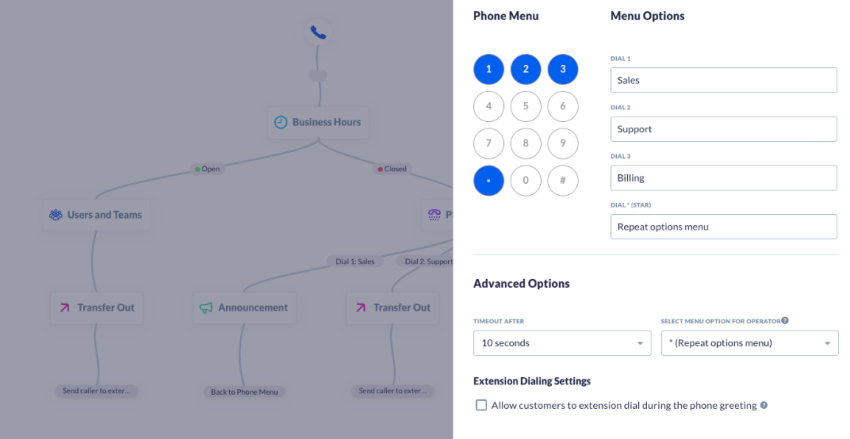
- Interactive voice response (IVR): Allows customers to navigate support options through automated menus before reaching an agent.
- Skill-based routing: Matches customers with agents who specialize in specific products, languages, or issue types.
- Predictive dialers: Automatically place outbound calls and reduce idle time for sales and outreach teams.
- AI call summaries: Automatically generate post-call summaries to reduce manual administrative work for agents.
- Sentiment analysis: Detects customer emotions and frustration levels during interactions to improve escalation handling and service quality.
- Workforce forecasting: Uses historical data and AI models to predict staffing needs and optimize scheduling.
- Real-time dashboards: Gives call center supervisors live visibility into queues, wait times, service levels, and agent activity.
- Omnichannel routing: Supports customer communication across voice calls, emails, live chat, social media, SMS, and messaging apps simultaneously.
- AI-powered chatbots and virtual agents: Handle repetitive customer inquiries and provide 24/7 self-service support.
- Speech analytics tools: Analyze customer conversations in real time to provide insights into customer sentiment, agent performance, and recurring service issues.
💡 Tip: Don’t go overboard with complicated software. Choose something scalable to fit your needs and easy for your agents to learn. Many vendors like Nextiva offer demos, so take advantage of those to test-drive the software before you commit.
5. Build your team
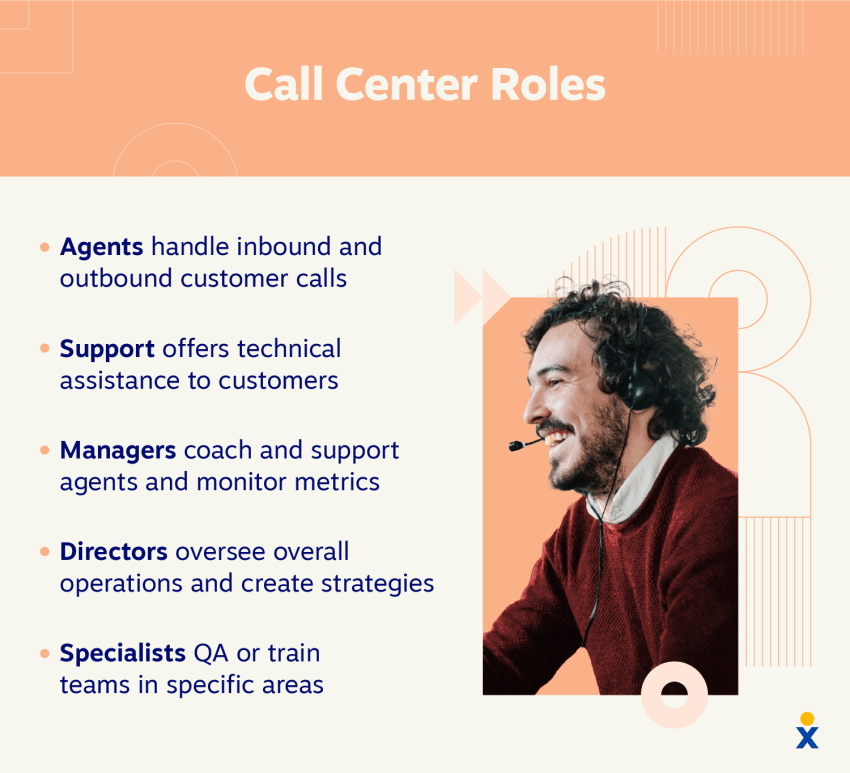
Your call center is only as good as the people working in it. That’s why building a fantastic team is crucial. Skilled agents, supervisors, and support teams directly impact customer satisfaction, operational efficiency, and long-term client retention.
Here’s how to make it happen: when recruiting agents, prioritize candidates with:
- Strong communication skills: Clear communication helps agents explain solutions effectively and build trust with customers.
- Active listening abilities: Understanding customer concerns accurately reduces misunderstandings and improves resolution rates.
- Problem-solving skills: Agents should be able to handle unexpected situations calmly and confidently.
- Emotional intelligence: Managing frustrated or emotional customers requires empathy, patience, and professionalism.
- Adaptability: Call center environments evolve quickly as customer expectations, workflows, and technologies change.
- Customer service experience: Previous customer-facing experience often improves confidence and interaction quality.
Once you’ve assembled your dream team, equip them with the knowledge they need to perform better. Develop a comprehensive training program that covers everything from in-depth product knowledge to call center best practices, covering:
- Product and service knowledge
- Call flows and escalation handling
- CRM and software systems
- Compliance requirements
- Communication techniques
- Conflict resolution and de-escalation skills
- Soft skills like empathy, active listening, and customer communication.
Your call center employees should feel valued and supported when working in your call center. To keep your team motivated and improve agent retention, create a positive work environment with opportunities for growth and development.
💡 Tip: Don’t stop learning once the initial training is done. Invest in ongoing coaching and development programs to sharpen your agents’ skills. Consider using gamification techniques (think points and contests!) to make learning fun and motivate your team.
6. Design efficient workflows
Streamlined workflows are key to consistent, high-quality service.
Here’s how to create a system that keeps your call center running smoothly:
- Clear call scripts and protocols: Develop standardized customer service scripts and protocols that act as a roadmap for your agents for successful customer interactions. This ensures a consistent approach and equips your team to confidently handle any situation.
- Performance metrics and KPIs: Keep your finger on the pulse of your call center’s performance by tracking key call center metrics. This could include average handle time (how long a call typically lasts), first call resolution rate (how often an issue is solved on the first call), and customer satisfaction scores. By analyzing this data, you can identify areas for improvement and ensure your agents exceed customer expectations.
- Quality monitoring and coaching: Call recording is a powerful tool. Use it to monitor call quality and provide constructive feedback to your agents during coaching sessions. This will help them identify areas for improvement and continuously hone their skills.
- Continuous learning: Ongoing learning is essential for a thriving call center. Develop training programs to keep your agents’ skills sharp and encourage knowledge-sharing initiatives amongst your team.
Common workflow automation examples
Modern call centers automate repetitive operational tasks to improve efficiency and reduce manual workloads. Here’s how to design even better workflows using automation.
| Automated workflow | How it helps |
|---|---|
| Callback scheduling | Lets customers request a callback instead of waiting on hold, improving customer experience and reducing queue frustration. |
| Ticket creation | Automatically creates support tickets after customer interactions, helping teams track and manage issues faster. |
| Post-call summaries | Generates AI-powered call summaries to reduce after-call work and save agents time. |
| Customer surveys | Automatically sends feedback requests after interactions to collect customer insights and gauge customer satisfaction. |
| Call routing | Directs customers to the most suitable agents based on skills, departments, or customer needs. |
| Appointment reminders | Sends automated reminders through calls, SMS, or email to reduce missed appointments and improve communication. |
| Follow-up messaging | Automates customer updates and follow-up communication after interactions to maintain engagement and improve service continuity. |
💡Tip: When designing your workflows, remember your customers. Gather their feedback and, based on their suggestions, find ways to streamline processes and reduce wait times. After all, a happy customer is a loyal customer.
7. Promote your call center services
Alright, your call center is up and running smoothly. Now it’s time to get the word out there and attract potential customers who need your services. Let’s look at a few ideas:
- Target the right clients: Identify your target clients. Once you have a clear picture, focus your marketing efforts on reaching those businesses. They’ll be the ones who truly appreciate the value you bring.
- Craft a compelling message: What makes your call center special? Do you have a knack for resolving customer issues quickly? Do your agents go the extra mile to provide exceptional service? Highlight your unique strengths and value proposition in your marketing materials.
- Get online and get active: The internet is a goldmine for reaching new customers. Consider online advertising, targeted email campaigns, or even creating informative content (like blog posts or videos) that showcases your expertise. Don’t forget social media, join relevant industry groups, and participate in conversations to build brand awareness.
- Events and partnerships: Industry events are a fantastic way to network with potential clients and partners. Showcase your services at trade shows or attend conferences where your target audience gathers. Partnering with complementary businesses in your industry can also expand your reach and generate leads through referrals.
You can also generate leads and acquire clients through:
- LinkedIn outreach: Helps connect directly with business owners and decision-makers in target industries.
- Cold email campaigns: Create opportunities to introduce services to companies actively looking for outsourcing solutions.
- SEO and content marketing: Improve visibility for keywords related to customer support, outsourcing, and contact center services.
- Referral partnerships: Generate leads through existing relationships and satisfied clients.
- Freelance marketplaces like Upwork or Clutch: Help smaller call centers build credibility and secure initial projects.
- Local business networking: Creates opportunities with nearby businesses needing customer support or appointment scheduling services.
- BPO partnerships: Allow smaller contact center providers to work as overflow or white-label support partners.
- Industry conferences and trade shows: Help build visibility, partnerships, and direct client relationships.
💡 Tip: Speaking the same language as your clients is key. Tailor your marketing messages to their specific needs and challenges. For example, if you’re targeting e-commerce businesses, highlight your experience in handling high volumes of customer inquiries during peak seasons.
Related: 5 Must-Attend Call Center Conferences in 2024–2025
8. Continuously monitor and improve
Launching a call center is a big accomplishment, but it grows over time.
Regularly analyze call center metrics to see what’s working well and where there’s room for improvement. Is your average handle time a little high? Are customers dropping off during phone calls? These metrics can point you in the right direction for improvement.
Don’t be afraid to adapt your workflows based on what you learn. Customer feedback is important too – listen to what they’re saying and use it to refine your processes. Industry best practices are constantly evolving, so stay up-to-date and be open to incorporating new strategies.
It’s good to keep an eye on the latest call center technologies and see how they can benefit your business. Maybe it’s a new kind of software that automates repetitive tasks or a tool that uses AI to personalize the customer experience. Embrace new tech that can give you an edge.
Where does your CX strategy stand with AI?
Take the AI Maturity assessment to get personalized recommendations on how to enhance your CX.
Last but not least, create a culture that encourages continuous improvement. Call center managers should hold regular team meetings to discuss call center metrics and get feedback from their agents. They’re on the front lines interacting with customers every day, so their insights are valuable. New ideas are always welcome; you never know what you might discover.
💡 Tip: Schedule regular team huddles to discuss performance metrics and brainstorm improvement ideas. This is a great way to keep everyone engaged and motivated to reach new heights.
Common Mistakes When Starting a Call Center
Your new call centers might struggle because of operational issues that could have been avoided with stronger planning and process management. Let’s see the common mistakes include:
- Hiring too quickly: Rapid hiring without proper onboarding and training often reduces service quality and creates inconsistent customer experiences.
- Understaffing during peak periods: Insufficient staffing increases wait times, raises call abandonment rates, and frustrates customers.
- Ignoring quality assurance (QA) processes: Without regular call monitoring and performance reviews, service quality becomes inconsistent and difficult to improve.
- Using disconnected software tools: Poor integrations between phone systems, CRM platforms, and support tools reduce operational visibility and slow down workflows.
- Weak onboarding and training: Inadequate training affects agent confidence, productivity, customer handling skills, and compliance awareness.
- Lack of compliance and security policies: Missing data protection and regulatory procedures can expose businesses to legal, financial, and operational risks.
- Not tracking performance metrics: Without monitoring KPIs like service level, average handle time, first call resolution, and customer satisfaction, operational problems become harder to identify and fix.
- Overcomplicating workflows early on: Complex processes often slow down operations, confuse agents, and reduce efficiency during the early growth stages.
- Poor queue management: High hold times, inefficient call routing, and long wait queues often lead to higher call abandonment rates and lower customer satisfaction.
High call abandonment rates caused by poor staffing or long wait times can also negatively affect customer satisfaction and retention.
Key Call Center Challenges (+ How to Overcome Them)
Even the most meticulously planned call center can face challenges. Consider common roadblocks and navigate them to efficiently set up your call center.
1. Recruiting and retaining top talent
One big challenge is finding and keeping good staff. High call center turnover rates remain a major operational challenge for many businesses.
Offer competitive pay and benefits, along with opportunities for career growth. Create a positive work environment that values employees’ well-being and work-life balance.
You can also use gamification and recognition programs to keep agents motivated. When you advertise for new hires, highlight your company culture and career development opportunities.

2. Maintaining high call center agent morale
Repetitive tasks, lots of calls, and frustrated customers can lead to call center burnout.
Empower agents by giving them some control over their work and the ability to solve problems, not just follow scripts. Let them take breaks and offer schedule flexibility.
Celebrate successes and recognize both individual and team achievements. Regularly ask agents for their feedback to see how things are going and what can be improved.
3. Delivering exceptional customer service
It can be tough to meet customer expectations, especially when dealing with complex issues or upset callers.
Apart from basic employee training, focus on providing agents with in-depth training on your products or services, as well as effective communication and de-escalation techniques. Help them resolve issues efficiently by focusing on first-call resolution rates.
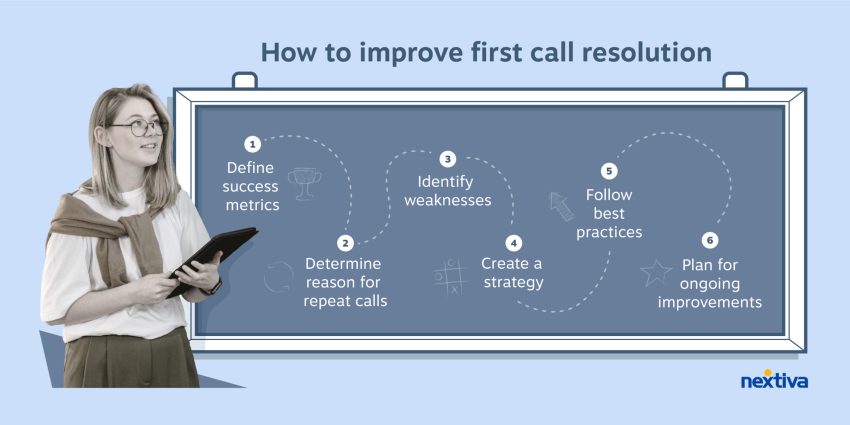
Ask customers for feedback regularly and use it to improve your service approach. Empower agents to offer small gestures of goodwill to resolve customer issues and create a positive experience.
4. Keeping up with technology
The call center landscape is constantly changing, with new tools and systems emerging constantly. Staying ahead of the curve can be expensive and time-consuming.
Set aside a budget to regularly evaluate and implement new technologies. Consider cloud-based solutions that are easy to scale and upgrade.
Encourage a culture of innovation and empower agents to suggest new technologies that can improve efficiency or customer experience.
Make sure to partner with a reliable call center technology vendor who can provide smooth onboarding, ongoing support, and guidance.
5. Adapting to changing customer needs
What customers want and how they want to connect with you constantly evolve. If your call center doesn’t adapt, customer satisfaction takes a hit.
For example, millennials are more likely to use text messaging than wait in a call queue. Likewise, if your business serves the elderly, it’s a safe bet that they’re less likely to contact you via social media channels than to make a phone call.
Offer omnichannel support so customers can connect with you through their preferred channel, whether it’s phone, email, chat, or social media.
Customer feedback through surveys and social media monitoring helps you understand customers’ evolving needs and preferences. Be prepared to adjust your service offerings and communication strategies accordingly.
Also, train agents to handle inquiries across multiple channels and provide a seamless customer experience regardless of how a customer chooses to connect.
Legal and Compliance Requirements for Call Centers
Compliance plays a critical role in protecting customer data, maintaining customer trust, and avoiding legal penalties when operating a call center. Depending on your call center industry, customer base, and geographic location, your business may need to comply with several regulations and operational standards.
Some of the most common compliance requirements include:
- TCPA regulations: Govern outbound calling practices, telemarketing communications, and customer consent requirements.
- STIR/SHAKEN requirements: Help reduce spam calls and caller ID spoofing in outbound calling operations.
- PCI DSS standards: Protect customer payment card information during transactions and payment processing.
- HIPAA regulations: Apply to healthcare-related customer information and patient data protection requirements.
- GDPR privacy rules: Regulate how businesses collect, store, process, and manage customer data.
- Call recording consent laws: Require businesses to notify customers when calls are being recorded, depending on local regulations.
- Labor laws and overtime regulations: Ensure businesses follow employee scheduling rules, wage requirements, and workplace policies.
Strong security and compliance practices should also include:
- Data encryption: Protects sensitive customer information from unauthorized access and cyber threats.
- Secure networks and VPNs: Improve security for remote agents and distributed teams working across multiple locations.
- Compliance training: Helps employees understand legal responsibilities, security procedures, and proper data handling practices.
- Audit trails and data retention policies: Maintain accountability and support regulatory audits and compliance reviews.
Understanding local and international regulations becomes especially important when operating across multiple states or countries, where rules for outbound calling, call recording, customer consent, and data privacy may differ significantly.
Top-tier cloud platforms like Nextiva natively embed advanced security, reliability, and compliance capabilities into their infrastructure, helping businesses protect customer data while maintaining enterprise-grade performance and availability.
It Starts With the Right Call Center Software
Launching a call center doesn’t have to be hard. Historically, it used to involve weeks, or even months, of installation long before the first call arrived.
Now, with the power of cloud-based communications, you can set up a new call center in hours. After you plan call flows and team workflows, the rest is a breeze.
When you start a call center, top features include:
But remember to only get (i.e., pay for) features that align with your business needs. Not everyone needs all the bells and whistles when starting out.
Now that you’ve learned how to start a call center company, partner with your call center software provider so they can help you achieve these goals, including helpful ideas to do it faster.
Nextiva is a top-ranked AI-powered Contact Center that helps empower agents and satisfy customers. Our award-winning customer service has earned us #1 ratings from Gartner, Frost & Sullivan, and other VoIP industry experts.
See why millions trust us daily.
Your call center solution.
For a cloud-based call center with many features that scale when you need to, check out Nextixa’s VoIP call center solution.
Call Center FAQs
Ready to start a call center? Read some of the frequently asked questions to better inform your setup.
The decision depends on your budget and call volume. A physical call center offers a centralized workspace but requires investment in office space, furniture, and IT infrastructure. Virtual call centers are more flexible and cost-effective, with agents working remotely. They rely on cloud-based technology and require minimal upfront investment.
The type of software depends on your call center’s functionality. Essential features include an automatic call distributor (ACD) to route calls efficiently, an Interactive Voice Response (IVR) for self-service options, and Customer Relationship Management (CRM) integrations for agent visibility into customer data. Costs vary depending on features, number of users, and vendor. Researching and comparing pricing options from different vendors is crucial when choosing call center software.
Here’s a quick guide on call center pricing.
Data security is paramount to maintain contact center compliance. Familiarize yourself with relevant regulations (e.g., PCI DSS) and implement safeguards. Invest in secure technology, employee training on data handling procedures, and robust data encryption methods.
Here are some essential call center metrics to monitor agent performance:
– Average handle time (AHT): Measures how long a call typically lasts.
– First call resolution rate (FCR): Indicates how often an issue is solved on the first call.
– Customer satisfaction scores: Gauge customer sentiment about their experience.
– Agent performance metrics: Track individual call center agent performance (call volume, wait times) to identify areas for improvement.
Regularly analyze call center data to refine processes, improve agent training, and enhance the overall customer experience.
To start your own call center business:
– Conduct market research to identify your niche.
– Create a solid business plan detailing operations, costs, and target clients.
– Choose the call center type.
– Set up essential technology like CRM software, telephony, and workforce management tools.
– Hire and train staff.
– Market your services to attract clients.
Like any business, profitability depends on client acquisition, service quality, and maintaining operational efficiency. Call centers can certainly be profitable, with profit margins ranging from 10% to 30%, depending on factors like efficiency, size, and industry. Cloud-based or outsourced operations can boost profitability by reducing overhead costs.
Here are a few ways to find clients for a call center:
– Network through industry events and professional associations.
– Use digital marketing strategies like SEO, social media, and email campaigns to reach potential clients.
– Offer competitive pricing and specialized services tailored to industries like healthcare, retail, or tech support.
– Build relationships with businesses needing customer service, sales, or technical support solutions.
– Leverage referrals and case studies to demonstrate your success to potential clients.
High-demand industries commonly include healthcare, e-commerce, SaaS, real estate, insurance, home services, financial services, and technical support. When promoting your services, clearly communicate your industry expertise, response times, customer satisfaction improvements, scalability, flexibility, cost efficiency, and compliance standards.