
Industrial mining facilities cooling is a core infrastructure decision for large-scale Bitcoin mining operations because thermal management directly affects ASIC performance, uptime, facility density, maintenance requirements and long-term economics. Air cooling and immersion cooling create very different capital, operating and technical profiles, so institutional operators need to evaluate each architecture against site conditions, fleet design and lifecycle cost.
Cooling decides how much hashrate a Bitcoin site can hold, how steadily that hashrate runs, and how much of each megawatt reaches the chips. For most institutional operators, air cooling remains the lower-cost and more practical default in cool or temperate climates with cheap land. Immersion earns its higher capital cost where heat, dust, noise limits, tight floor space, or overclocking strategy push air systems past their limits. Neither architecture is cheaper in every case. The result depends on climate, power price, ASIC compatibility, utilization, and facility size.
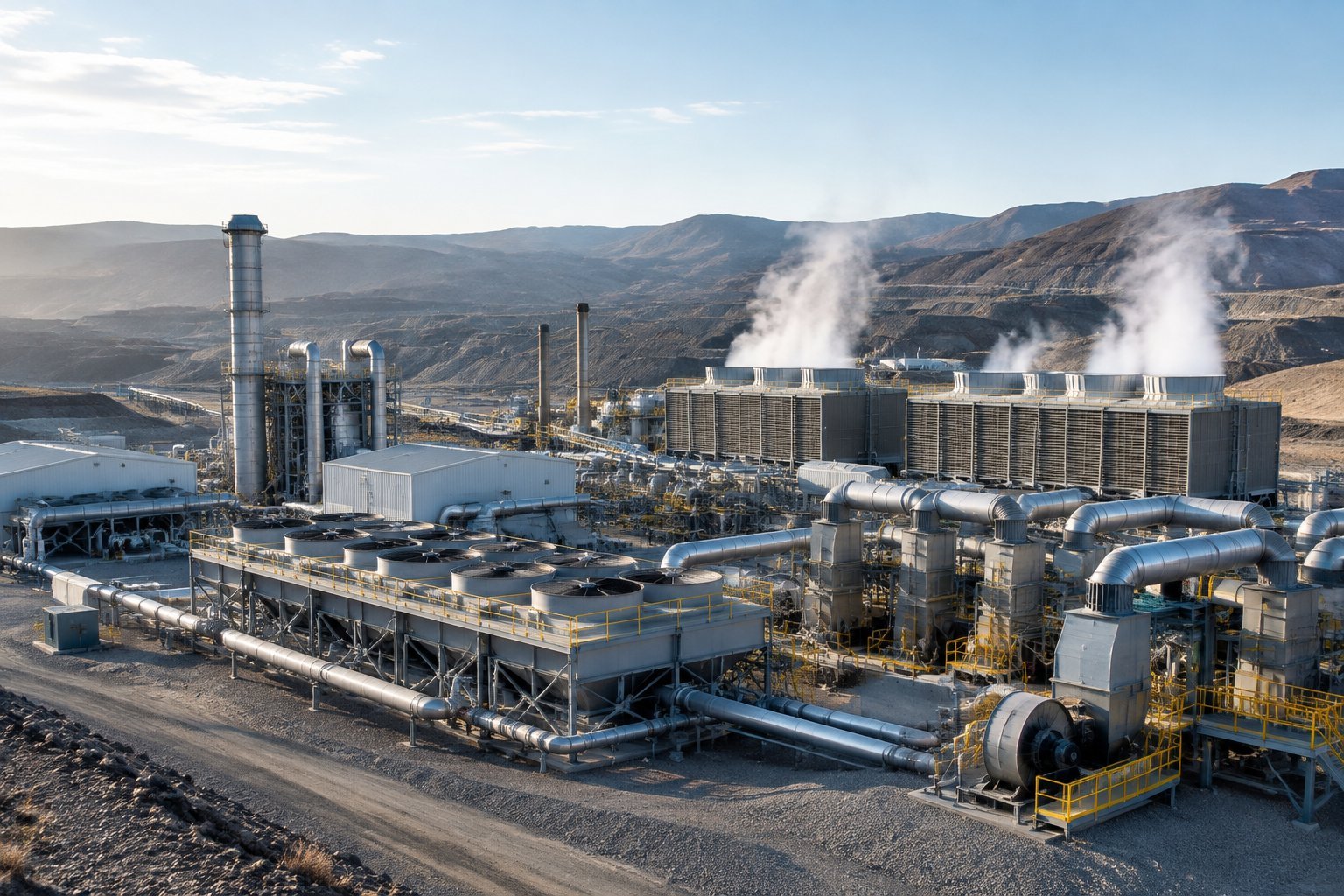
The choice also shapes risk. Air-cooled fleets face fan wear, dust, and summer throttling. Immersion fleets trade those problems for fluid management, leak control, and warranty limits. An ASIC that draws 3,500 watts turns almost all of that power into heat, so every architecture must remove the full electrical load, plus margin, around the clock.
Teams weighing a new build or a retrofit can contact us to talk through site assumptions before committing capital.
Key Takeaways
- Air cooling wins on first cost and simplicity at most temperate, low-density sites.
- Immersion buys density, steadier chip temperatures, and overclock headroom at higher capital and operating complexity.
- Whole-facility energy use, uptime, and site limits decide the outcome more than equipment efficiency alone.
How Do Air and Immersion Cooling Work for Bitcoin ASICs?
Both cooling systems move the same heat. They use different carriers: air relies on fans and large volumes of air, while immersion relies on direct contact with a dielectric fluid and a pumped loop. The cooling equipment outside the hall, along with the power and monitoring layers, overlaps more than many buyers expect.
How Air Cooling Moves Heat out of a Facility
Each air-cooled ASIC ships with built-in fans that pull air across heatsinks bonded to the hash chips. At facility scale, operators separate intake and exhaust into cold and hot aisles. Industrial exhaust fans then push heated air out of the building or container. A common design target is 150 to 200 cubic feet per minute (CFM) of airflow per kilowatt of mining load. A 1 MW hall therefore needs roughly 150,000 to 200,000 CFM.
Recirculation is the main design failure. When hot exhaust leaks back into the intake path, every machine downstream runs warmer. Containment curtains, sealed walls, and negative-pressure exhaust control this risk.
How Immersion Cooling Transfers Heat to a Fluid Loop
Immersion places miners in tanks filled with dielectric fluid. The fluid carries heat but does not conduct electricity. The fans come off, and the fluid absorbs heat straight from the boards. Pumps move warm fluid to a heat exchanger, and the cooled fluid returns to the tank.
Most large deployments use single-phase fluids that stay liquid throughout the loop. In the double-loop design MARA describes as the most common method at scale, the dielectric loop hands heat to a secondary water or water-glycol loop, which then rejects it outdoors. Two-phase systems boil fluid on the chip surface. Their fluid supply is now constrained, so they remain a niche for Bitcoin sites.
Which Components Are Shared Across Both Architectures?
Several layers stay the same no matter which architecture a site picks:
- Electrical backbone: transformers, switchgear, PDUs, and three-phase distribution.
- Monitoring: chip and board temperature, hashrate, power draw, and alerting.
- Heat rejection to outdoor air: both systems end at the atmosphere, whether through exhaust fans or dry coolers.
- Network and security: redundant internet links, access control, and fire protection.
Because these layers carry over, a hybrid site can run both systems on one substation. Good facility operations practice treats cooling as one part of a single integrated plant.
What Changes in ASIC Performance and Fleet Uptime?
Immersion holds chip temperatures steadier, which protects hashrate during hot periods and opens room for overclocking. Air cooling performs well when intake air stays within the manufacturer’s range. Both architectures carry failure modes that operators must plan around.
Chip Temperatures, Throttling, and Overclocking
ASICs protect themselves by cutting hashrate when they run too hot. Air-cooled machines begin to throttle once intake air climbs past roughly 35 to 40°C, and summer peaks can cost 5 to 15% of hashrate at poorly cooled sites. Heat also raises power draw at constant frequency, so a hot miner burns more energy per terahash.
Immersion keeps the fluid bath at a stable set point regardless of outdoor weather. That stability is what makes overclocking practical. Operators running third-party firmware report sustained gains of 10 to 30% above stock hashrate. Those gains carry costs: power rises with clock speed, PSUs run past their design point, and third-party firmware voids manufacturer warranties. Whether overclocking pays depends on the power price and hashprice, which is why hashrate economics belong in the cooling decision.
Failure Modes and Their Effects on Mining Operations
Fans are the most common mechanical failure point in an air-cooled ASIC. Dust buildup on heatsinks slowly lowers cooling capacity across a fleet. These failures happen one unit at a time and are easy to fix, so their effect on mining operations is spread out.
Immersion removes fans and dust, but it concentrates risk. A pump failure or a heat-exchanger fault can raise temperatures in a whole tank or loop at once. Hashboards and power supplies still fail under immersion, so in-house repair capacity is still needed. Operators also report longer hardware life in fluid, but those gains are reported by operators and have not been proven in controlled studies.
How Do Capital Costs and Long-Term Economics Compare?
Air cooling costs less to build. Immersion asks for more capital up front in exchange for density and possible operating gains. Whether that trade pays back depends on assumptions that differ for every site.
Initial Equipment, Building, and Installation Costs
Published ranges show the gap clearly, though they vary by source and scope:
| Item | Air Cooling | Single-Phase Immersion |
|---|---|---|
| Cooling install per MW | $15,000 to $40,000 | $80,000 to $150,000 |
| 40-ft container | $60,000 to $150,000 | $150,000 to $400,000+ |
| Infrastructure per IT kW (excluding miners) | €150 to €350 | €300 to €600 |
| Typical cooling PUE | 1.05 to 1.10 | 1.02 to 1.05 |
| Rack density | About 25 kW | 50 kW or more |
| Noise in hall | 75 dB or more | Near silent at the tank |
These figures exclude miners, land, and the utility connection. Electrical work, especially transformers with lead times of 6 to 18 months, often sets both the budget and the schedule. Immersion also adds tanks, fluid, pumps, piping, and heat exchangers. Air-cooled designs need more floor area and building volume for airflow.
How to Compare Total Cost of Ownership Under Stated Assumptions
A fair total cost of ownership (TCO) model states its inputs first. At minimum, it should fix these values:
- Power price in dollars per kWh, including demand charges and curtailment revenue.
- Climate: design dry-bulb and wet-bulb temperatures and annual hours above throttle point.
- Utilization: expected uptime after curtailment and maintenance.
- Hardware plan: stock settings or overclock, warranty status, and refresh cycle.
- Facility size: total MW and the land and building cost per MW.
From there, compare capital per MW, annual cooling energy, maintenance labor, fluid and filter costs, and hashrate lost to heat. Air cooling’s PUE of 1.05 to 1.10 already sits close to immersion’s 1.02 to 1.05. That leaves a narrow energy gap, and it can close or widen with climate. A profitability calculator helps test how each case moves break-even under different hashprice paths. Our methodology page explains how such assumptions are framed.
What Are the Power and Operating Cost Trade-Offs?
Immersion removes ASIC fans but adds pumps. Air removes pumps but keeps thousands of fans spinning. Both pay for heat rejection outdoors, and that last stage often decides operating cost and water use.
Fan, Pump, and Heat-Rejection Power
Equipment efficiency and facility efficiency are two different measures. Onboard fans draw an estimated 5 to 10% of total miner power in standard air-cooled ASICs. Removing them lowers the miner’s own draw. Air-cooled PUE figures count those fans as IT load, so published air numbers look slightly better than the true cooling burden.
At the facility level, air sites spend power on exhaust fans. Immersion sites spend power on fluid pumps and dry-cooler fans. Cooling overhead at forced-air sites runs about 50 to 100 kW per MW, against 20 to 50 kW per MW for single-phase immersion. Traditional chiller plants run far higher, at 300 to 500 kW per MW, which is why few Bitcoin sites use them.
When Heat Exchangers, Condensers, or Cooling Towers Are Needed
Heat exchangers are built into nearly every immersion design, since they pass heat from the dielectric fluid to a secondary loop. Condensers appear mainly in two-phase systems, where vapor turns back into liquid on a coil. Dry coolers reject heat to outdoor air with no water use.
Cooling towers come into play when dry coolers cannot hold fluid temperatures on the hottest days. Towers reject heat through evaporation, which lets them reach lower temperatures in heat. That gain comes with water treatment, drift control, freeze protection, and local permitting, so many designs run dry most of the year and add evaporative help only at peak. Air-cooled halls in dry regions sometimes add evaporative pads instead, which can drop intake air by 10 to 15°C.
Water, Fluid, and Routine Service Costs
Recurring costs differ by architecture:
- Air: filter replacement every 30 to 90 days in dusty areas, fan swaps, and heatsink cleaning.
- Immersion: fluid top-ups and testing, pump and seal service, and heat-exchanger cleaning.
- Towers or evaporative systems: water purchase, chemical treatment, and blowdown disposal, all covered in this cooling tower operating cost guide.
Paired with dry coolers, immersion can run close to zero water use. Power price drives the larger share of operating cost, so energy markets exposure shapes which savings matter most at a given site.
How Do Density and Infrastructure Requirements Differ?
Immersion packs roughly twice the power into the same floor space, but it adds heavy tanks and a liquid network. Air spreads load across more area and needs open paths for large volumes of moving air.
Rack Layout, Electrical Distribution, and Floor Loading
Air-cooled ASIC racks run near 25 kW. Immersion deployments support 50 kW or more per rack position. Higher density shortens cable runs but concentrates current, so busways, PDUs, and breakers must be sized for heavier local loads.
Floor loading changes too. A tank full of fluid and miners weighs far more per square foot than a shelf of air-cooled units. Slabs may need engineering review, especially in converted warehouses. A fully loaded 40-foot air-cooled container already weighs 25,000 to 40,000 pounds, and immersion units weigh more.
Airflow Paths Versus Tanks, Piping, and Secondary Loops
Air designs need intake louvers, filters, and exhaust walls. They also need enough building height or container length to avoid recirculation. Warehouse conversions without containment can lose 30 to 40% of cooling effectiveness when exhaust mixes back into intake air.
Immersion halls replace those air paths with supply and return piping, pumps, valves, and leak containment. Secondary water-glycol loops run to dry coolers or towers outside. The building can be smaller and quieter, but mechanical drawings grow more complex. A plumbing fault then becomes an uptime issue.
What Maintenance and Reliability Risks Matter Most?
Air-cooled fleets carry many small, routine risks. Immersion fleets carry fewer routine tasks but larger single points of failure. Redundancy planning reduces the downside of either model.
Dust, Filters, Fans, and Air-Cooled ASIC Service
Dust is the slow threat in air-cooled halls. Debris on heatsinks can cut cooling effectiveness by 10 to 20% over 6 to 12 months. Sites in farm or desert areas should use intake filters rated MERV 8 or higher, though filters add static pressure and need larger fans.
Service is simple. Technicians swap fans and clean units with common tools, and repaired miners return to standard racks. Fans at full speed reach up to 90 decibels per machine, so hearing protection is part of daily work.
Fluid Quality, Leaks, and Immersion-Compatible Repairs
Immersion moves the maintenance focus to the fluid. Teams test it for contamination and moisture, top it up as levels drop, and keep seals and fittings tight. Some thermal pastes and capacitor types break down in dielectric fluid, so hardware must be checked for compatibility.
Repairs take extra steps. Miners come out of the tank, drain, and get cleaned before bench work. Repair staff need training on fluid handling, and spill response plans should cover tank rooms.
Redundancy and Recovery After Cooling Failures
Air-cooled sites lose capacity gradually as single fans or exhaust units fail. Immersion sites can lose a whole loop if a pump or exchanger fails, so N+1 pumps and spare exchanger capacity are standard practice. Modular dry coolers help here, since losing one module cuts capacity without stopping the plant.
Both architectures benefit from automatic curtailment that lowers hashrate before temperatures reach damage thresholds. Operators should document recovery steps and spare-part stock for each failure path. Our risk disclaimer notes the general limits of any planning model.
How Do Climate, Noise, and Site Conditions Affect the Choice?
Site conditions often settle the question before cost models do. Hot, humid, dusty, or noise-restricted sites lean toward immersion. Cold, dry, rural sites favor air.
Ambient Temperature, Humidity, and Air Quality
Air cooling works best when intake air stays between about 15 and 30°C. Where summers run above 35°C, as in parts of Texas, air-only designs face throttling or need evaporative help. Cold northern sites can run air-cooled halls with very low overhead for much of the year.
Humidity matters in both directions. Very dry air raises static risk, and very wet air raises corrosion and condensation risk. Evaporative coolers lose much of their effect in humid regions. Immersion seals boards away from moisture and dust, which is a major reason it suits harsh climates. Altitude also lowers air density, and designers add about 3% fan capacity per 1,000 feet above roughly 5,000 feet.
Noise Limits, Water Availability, and Fluid Handling
An air-cooled mining hall runs at 75 decibels or more, and exhaust walls carry that noise past the fence line. Sites near homes may face local limits that require sound walls, enclosure changes, or immersion. Immersion tanks are near silent, though dry coolers outside still make noise.
Water availability limits towers and evaporative systems in dry regions, where permits can hinge on water draw. Fluid handling adds its own rules: storage, spill containment, and disposal of spent dielectric fluid.
How Complex Are Deployment and Fleet Expansion?
Air-cooled capacity deploys faster with fewer specialist trades. Immersion adds mechanical work and hardware checks at every growth step.
Retrofit Constraints and ASIC Compatibility
Converting air-cooled ASICs to immersion means removing fans and changing fan-error settings. It also means accepting warranty risk: submerging a standard air-cooled Bitmain unit voids its warranty, and purpose-built immersion models keep coverage only in approved fluids. Some components may not tolerate certain fluids over time.
Building retrofits face their own limits. An existing warehouse may lack slab strength for tanks, space for outdoor dry coolers, or routes for piping. Air retrofits mostly need wall openings, fans, and containment.
Commissioning, Modular Growth, and Supply-Chain Dependencies
Containers let both architectures grow in blocks. A container build takes about 4 to 12 weeks, while utility and transformer work runs 2 to 6 months or longer. Electrical gear, not cooling gear, usually sets the timeline.
Immersion commissioning adds pressure tests, fluid fills, pump balancing, and controls tuning. It also depends on fluid supply, and the end of 3M’s fluorinated fluid production shows how fast a supply chain can change. Air expansion relies on common fans and filters with deep supplier pools. Growth in standard 50 to 100 kW or container-sized blocks keeps spares and training simple for institutional mining farms.
Which Architecture Fits Each Facility Strategy?
Air fits sites with cheap land, mild weather, and a stock-settings fleet. Immersion fits sites where density, climate, noise, or overclocking drive value. A structured framework turns those patterns into a site-specific call.
When Air Cooling Is the More Practical Choice
Air cooling makes sense when several of these hold:
- Design summer temperatures stay below roughly 35°C.
- Land and building space cost little per MW.
- The fleet runs stock firmware under manufacturer warranty.
- Fast deployment and simple field repair carry high value.
- Noise limits at the property line are loose.
When Immersion Cooling May Justify Its Added Complexity
Immersion earns its premium when heat, dust, or humidity would cause throttling or early failures with air. It also fits sites where power is secured but space is tight, where local noise rules are strict, or where the operator plans to overclock and can price warranty loss. Heat reuse, such as greenhouse or building heat, adds value because immersion delivers heat in a liquid that is easy to pipe.
A Decision Framework for Site-Specific Trade-Offs
Teams can score each site in five steps:
- Climate check: count annual hours above the air throttle point using local weather data.
- Density need: compare available floor area to target MW.
- Hardware plan: decide stock or overclock, and confirm warranty and fluid compatibility.
- Cost model: run TCO at low, base, and high power prices and hashprice cases.
- Constraint screen: check noise, water, permits, and repair staffing.
If air passes the climate and space checks and the fleet runs stock, air usually wins. If air fails any hard constraint, immersion or a hybrid deserves full modeling.
A disciplined industrial mining facilities cooling strategy should compare more than headline efficiency. Institutional operators should assess cooling-system capex, parasitic power consumption, maintenance burden, deployment complexity, retrofit constraints, failure modes and expected impact on ASIC lifespan. The objective is to select the cooling architecture that delivers the strongest combination of reliability, fleet efficiency, scalability and lifecycle economics for the specific mining facility.
Choosing Cooling for Durable Fleet Economics
Air and immersion are complete operating models, each with its own cost curve and risk profile. Air offers lower capital cost, simpler service, and fast growth where weather and space allow. Immersion offers density, stable chip temperatures, quiet operation, and overclock room in exchange for higher capital cost, fluid management, and warranty limits.
The sound choice comes from stated assumptions about climate, power price, ASIC compatibility, utilization, and site size. Operators should model whole-facility energy and lost hashrate side by side, then test the result against hard limits on noise, water, and repair capacity before ordering equipment.
Frequently Asked Questions
What is an industrial cooling system for a Bitcoin mining facility?
It is the plant that removes heat from ASIC miners and sends it outdoors. Air systems use fans, aisle containment, and exhaust walls. Immersion systems use fluid tanks, pumps, heat exchangers, and dry coolers or towers.
Is immersion cooling more energy-efficient than air cooling?
At the equipment level, yes, because miners run without fans and the fluid moves heat well. At the facility level, the gap is smaller: well-designed air sites reach a PUE of about 1.05 to 1.10, compared with 1.02 to 1.05 for single-phase immersion. Climate and heat-rejection design can shrink or widen that difference.
Can existing air-cooled ASICs be converted to immersion cooling?
Many can, after fan removal and firmware changes, but conversion voids standard Bitmain warranties. Some parts may also degrade in certain fluids. Operators should confirm compatibility and price the warranty loss before converting a fleet.
When does a cooling tower make sense for a Bitcoin mining facility?
A tower makes sense when dry coolers cannot hold loop temperatures during hot weather and water is available. It adds water treatment, permitting, and freeze protection, so many sites use towers only for peak days.
How much does it cost to cool an industrial Bitcoin mining facility?
Published ranges run about $15,000 to $40,000 per MW to install forced-air cooling and $80,000 to $150,000 per MW for single-phase immersion. Those figures exclude miners, land, and the utility connection. Ongoing cost depends mostly on power price and cooling overhead.